August Book Wrap-Up
July was an incredibly busy month, so we’re skipping it! Here is the month of August’s reading summary, and as always, SPOILERS AHEAD!!

Margot’s Got Money Troubles- Rufi Thorpe
I almost never read realistic fiction. The beach-read romance and comedy genre is almost never what I’m interested in. But when I randomly picked up Margot’s Got Money Troubles and read the back, the premise was genuinely so insane I had to see what was going to happen. After reading it, I can say it delivered on the absurdity. It was an absolutely bonkers, but also empathetic character study of a young mom in desperate times. However, I’m still not sold on the genre and I don’t think I will continue to read more books like it.
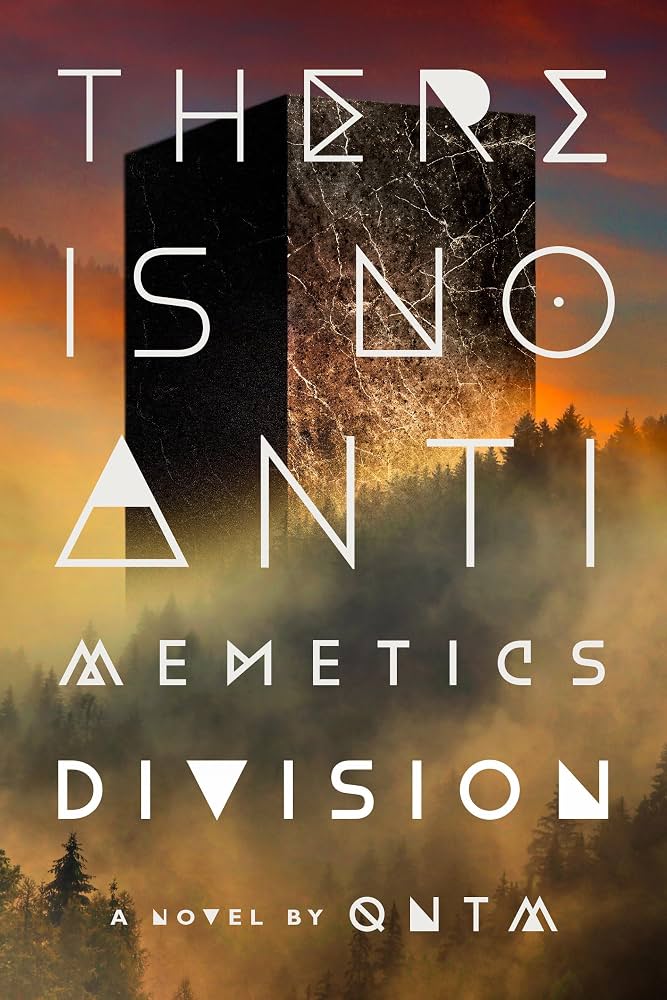
There is No Antimemetics Division- QNTM
This book was my first introduction to the SCP Foundation, an online collaborative writing project about a foundation that contains various dangerous anomalies. There is No Antimematics Division seems to be about a special type of these anomalies called antimemes, which are actually fascinating. These anomalies can’t be perceived by the human mind unless under certain circumstances- how do you fight against a threat your brain can’t even comprehend? It’s quite like the aliens in Blindsight, showing how being conscious of the world around you is a fickle thing.
The structure of the book really works for the most part. It introduces anomalies through files and through short sections of story. There are some absolutely terrifying moments in the book, especially that one scene where only one character can see a horrifying eldritch monster while no one else can and gets killed by it. The imagery is also otherworldly- there are giant structures and ruins from past civilizations that humans just can’t perceive because of antimematic shielding.
The most interesting concept for me personally was antimematic ecosystems and biology. The book introduces an animal species that dies when it is perceived, so it has evolved antimematic shielding as a defense mechanism. This really makes you wonder what other antimematic creatures exist. Are there antimematic pathogens? Are there predators and prey, a whole ecosystem just outside our perception? So many questions!
One thing I think the book could have done better with is the pacing. I think the main threat, SCP 3125, was introduced too early on. This SCP can only be perceived in one room in a Foundation site. People have to periodically enter the room, but when they exit, they have to take amnestic drugs to forget everything they saw or did in the room. This is because if any knowledge or perception of SCP 3125 is taken out of the room by someone, SCP 3125 will immediately kill that person and everyone they know, making it so that they never existed. SCP 3125 is a multidimensional entity that is trying to enter our world, so yeah. That’s a problem. However, to give this situation the gravity it deserves, I think there needed to be more buildup. There could have been more chapters with independent yet vaguely linked stories of agents dealing with different antimematic threats, so when SCP 3125 shows up, we truly understand how different it is from the other antimemes.
Anyways, this book was really REALLY good. It was mind-bending, kinda terrifying, and a whole lot of fun.
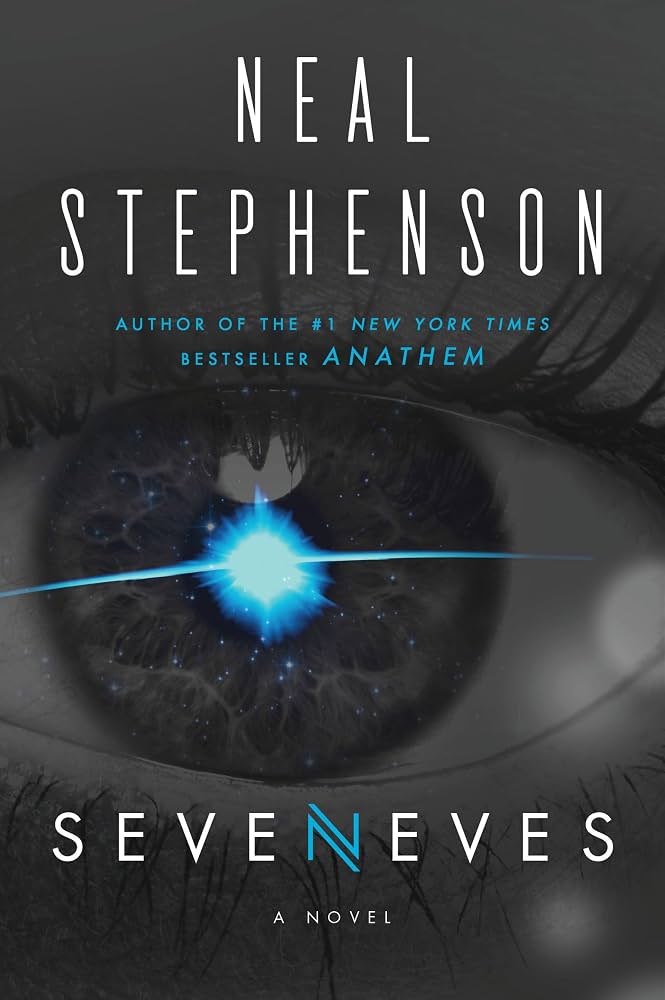
Seveneves- Neal Stephenson
Reading this book feels like watching a movie. The best way to describe the feeling is like… watching Project Hail Mary? But not exactly. Both stories are pretty hope-core and they showcase the moments of joy humanity finds even when faced with the end of the world. Children draw spaceships, people still fall in love, everyone goes on with their lives. Except, in PHM, the world is hoping to be saved, and in Seveneves, everyone knows Earth is doomed.
In this book, the moon explodes out of nowhere. I love how the author didn’t explain how this happened- humanity just had to deal with the consequences. Scientists predict that the moon chunks will fall onto Earth around two years after the explosion, ending all life on the planet. As a last resort, people are selected to get on a spaceship to leave Earth and come back 5,000 years later to repopulate the planet.
Again, the book is very sequential- this happens, then this happens, and then THIS happens. Pretty much like watching a movie. I love how the author managed to incorporate the social impacts of the situation in addition to the sci-fi, like communities fighting over which people to send on the spaceship and Ark members grappling with the fact they have to leave their families behind. But honestly speaking, a lot of the math and engineering aspects went completely over my head. Biology and Chemistry? I can understand. Robotics? Absolutely not.
There was some fascinating biology in Seveneves though. When discussing changes to make in the DNA of their offspring, the ethics of gene editing are brought up. What’s the line between natural variation and a disorder? Should bipolar disorder be edited out? What about aggression? Should obedience and discipline be incorporated into every genome? It’s a fascinating discussion. Epigenetics are also brought up- it’s a common misconception that you only need to know the sequence of nucleotides in DNA to know everything about an organism. In reality, a lot of these sequences are blocked or activated by external mechanisms. The biologist in Seveneves is able to experiment with epigenetics to create humans with extremely unique capabilities.
The entire time I was reading, I was wondering what the meaning of the title was. And OH MY GOD, I thought the reveal was brilliant. You should read it for yourself to find out! And the last third or so of the book is about the future civilization that comes back to Earth to rebuild its ecosystems and civilizations. Seveneves was a good read from start to finish, and even though I definitely didn’t understand all its sci-fi intricacies, it was interesting.
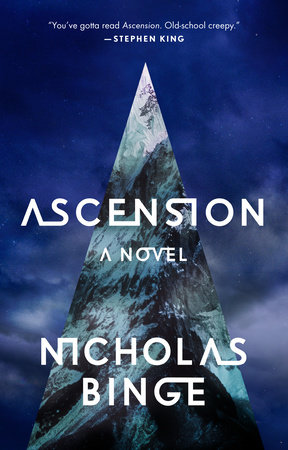
Ascension- Nicholas Binge
Ok. So. What in the Annihilation wannabe was this book?? Ascension started off with an eerie atmosphere and an intriguing premise; a man finds letters written by his brother who had been missing for many years. As we read the letters ourselves, we learn that the brother, a physicist, was sent on an expedition up a mountain that suddenly appeared in the middle of the ocean. Already, it’s pretty similar to Annihilation, but that’s not really a bad thing if Ascension can set itself apart thematically. Annihilation plays around with biology and ecosystems, and Ascension is more concerned with the dimensions of space and time. However, I don’t think Ascension managed to succeed in even telling a coherent story with those teams.
First of all, something about the prose just irks me. The book’s plot is told through letters written by Harry, the physicist going up the mountain, and I can’t imagine any person writing the way he does. The dialogue feels really stilted, and the way scenes in the book play out feel more like reading a chapter book rather than a collection of letters. It’s not immersive AT ALL. In fact, I actively get less immersed because the characters don’t think, act, or talk like real people.
The characters’ decision making and behavior in this book is actually incomprehensible. Harry’s ex-wife Naoko was a medic and she was on a previous expedition on the mountain. She was one of two survivors, and was exhibiting serious symptoms of psychosis. So tell me, why on Earth would the people organizing the expedition send Naoko up the mountain again?? And the reason they give is preposterous; she might gain more consciousness and regain her memories as she goes up again. What basis did they have for guessing that? IT MAKES NO SENSE!!
The scientists also don’t talk or act like actual scientists or even people with common sense. One thing the book tries to do a lot is create shocking moments of discovery, but it usually falls flat. In Ascension, the scientists study microbes found on the mountain, and surprise! These microbes use a RNA in a double-helix structure to store genetic material. However, these scientists explain over, and over, AND OVER again how surprising and impossible of a discovery this is, and how this changes everything they know about the natural world, and blah blah blah. There is so much telling, not showing! A comparable scene in Annihilation is when the biologist takes a sample of the flesh walls and looks at it under a microscope. It turns out it was made of human brain cells. The biologist doesn’t exclaim in shock over and over again about how insane of a discovery that is- instead, she just lets the revelation sit there. She notices it, pauses, and keeps going because she has no other choice. We as the reader can feel the horror for her, no explanations needed.
Another moment of the scientists being absolute doofuses was when the physicist was explaining his theory about the mountain. He theorizes that the mountain exists in 4-dimensional space, and some entity is picking it up and moving it throughout space and time. I don’t think my explanation of this is very good, but I will say, the book did a pretty good job of explaining this concept and allowing the main character to naturally reach this conclusion. But tell me why the other scientists traveling with him would think that this 4D theory is so completely and utterly garbage that it should be dismissed immediately and angrily? These other scientists have no reason not to believe the physicist- like truly, these guys have seen people who can see the future, tentacle aliens (we’ll get there), and a MOUNTAIN THAT APPEARED OUT OF NOWHERE. There is no reason to be so defensive of 3D space when everything you know about the world is wrong. The characters in this book truly act like idiots.
And now. The tentacle aliens.
I think the real appeal of this type of sci-fi existential horror is how something you think is defined by rules, order, and experimentation, actually turns out to be chaos and completely out of your comprehension. These anomalies in natural law are supposed to hit the uncanny valley, not too mundane of surprise, but not so out there it seems like fantasy. And the tentacle aliens in Ascension are so unbelievably out there and cliche they circle back to being unpredictable. Unpredictable in the sense that, why would anyone include these creatures because they don’t develop the themes and atmosphere in any meaningful way? I don’t know.
But nothing I’ve talked about so far comes close to the final twist, the reveal of the big-bad that has been among the group the entire time. This is, without a doubt, the corniest thing I’ve ever read in my entire life. I think reading Ascensions was worth it, solely for the amount of time I spent laughing deliriously at this ‘plot point’. Here it goes. One of the characters in the group, a guy named Neil Amai, had always acted a bit strange. He also didn’t have a very clear backstory. Near the end of the book, when the group has to split up, Neil Amai goes with Naoko, leaving Harry and some other guys behind. I kid you not, this is what I read on the page with my own two eyes:
“ “Neil Amai,” I repeated. “Neil Amai. Spell it backward.”
I watched as the look of realization spread across their faces.
I am alien.”
PFFFF WHAT KIND OF GOOFY GOOBER VILLAIN DOES THIS?? I’m sorry, I am alien? Neil Amai? Genuinely, I would expect this kind of reveal to be shocking for a first grader. How am I supposed to take this seriously? How am I supposed to take this book seriously? If I were Harry I would have started cry-laughing at the sheer corniness of the villain.
I really don’t have much else to say about this book. My problem with it is not because it fails to be Annihilation– I think it had plenty of potential to be its own meaningful story. Unfortunately, it fails at the most basic level to tell that story. However, I will say that I don’t regret reading this book. I am genuinely so thankful that Neil Amai is a real twist that exists unironically.
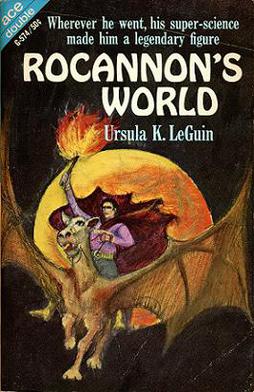
Rocannon’s World- Ursula K. LeGuin
This story is an absolute gem. It’s so hard to describe the feeling of reading the first chapter. Rocannon’s World begins with an alien woman on a quest to bring her husband the perfect wedding gift: a mystical necklace. The prose makes me feel like I’m hearing a myth that was passed on through generations, a story that’s feels so familiar yet goes places I never would have imagined. I don’t even want to spoil what happens on her quest, which sets the stage for the rest of the story.
Rocannon’s World is an anti-colonial sci-fi novel where an interstellar anthropologist, Rocannon, helps the people of a planet being colonized by evil space humans overthrow their oppressors. This sounds a bit dry, but the way it is told is the same as the introductory story: as if a legend is being made right in front of our very eyes. I don’t know how the author, Ursula K. Le Guin does it. She writes her characters with such understanding and empathy for who they are. This story is beautiful and heartbreaking, so hopeful in building a kinder and better world.
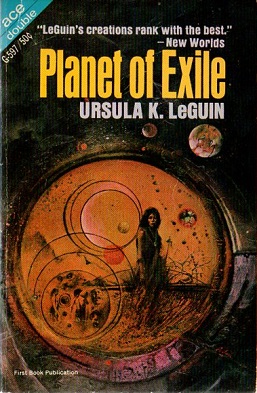
Planet of Exile- Ursula K. LeGuin
This one was another nice story! It didn’t quite have the same otherworldly mythical feeling as Rocannon’s World, but that’s fine. It has somewhat of a similar premise to ASOIAF but was significantly more hopeful- on a planet where a decade long winter is about to come, rivaling tribes need to sort out their differences to face an even greater threat. But yeah, other than that I don’t have much to say.
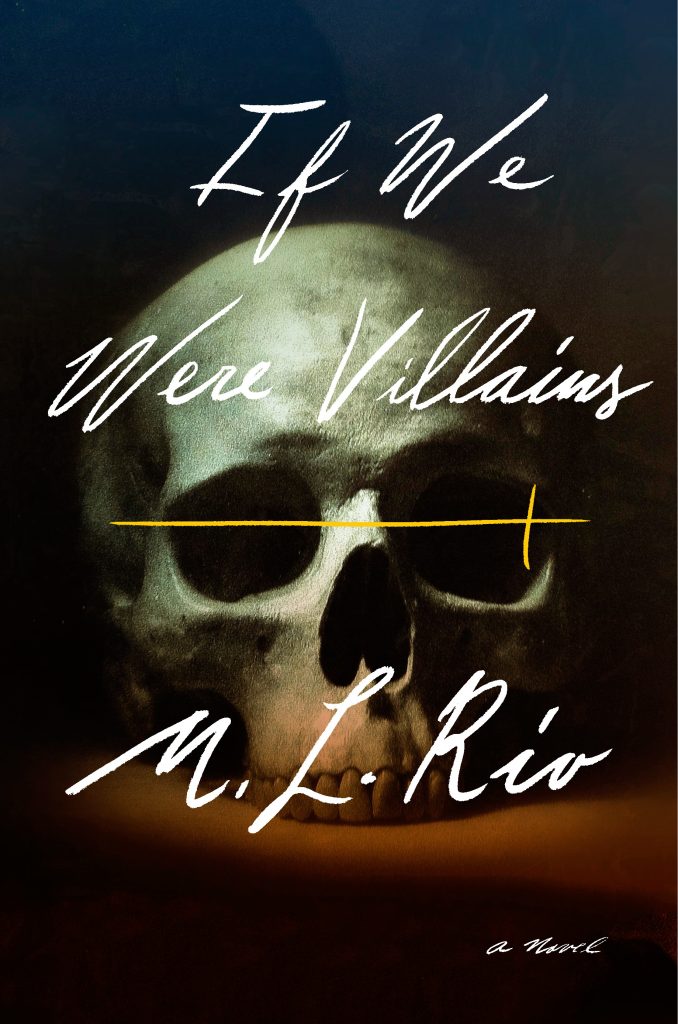
If We Were Villains- M.L. Rio
Oh my gosh, the characters in this book are the most dramatic and absurd theater kids I’ve ever conceptualized, they hardly seem real! But I always say that I want something like The Secret History, and I can safely say If We Were Villains lived up to my expectations and more. Usually, in the dark academia I’ve read, the author doesn’t quite understand the themes and literature they bring up- and that’s being generous, because most of the time, academics is only mentioned in passing and the author doesn’t even try to engage with anything outside the superficial aesthetic. But in If We Were Villains, I felt that there was a real understanding of Shakespeare and his works that showed in the characters’ dialogue and arcs.
But dang, there were SO MANY Shakespeare references that I didn’t quite get because I don’t usually read him outside of required readings for school. I probably should have touched up on Hamlet and Macbeth before starting If We Were Villains. Even though I’m not as familiar with Shakespeare, the author does a fantastic job at breaking down the prose and extracting what is relevant for the story being told- the way the characters analyze and debate the text feels incredibly natural, and exactly what I wanted.
And of course, the murder thriller aspect was absolutely thrilling. Some of the imagery in this book is so evocative; a poster for the school production of Julius Caesar shows is described in a very imposing way, showing a character named Richard as the tyrant Shakespeare wrote. This also connects directly with the character and his arc, because Richard was like a tyrant himself, who was acting so increasingly violent that his friends thought his death would be for the greater good.
It was the death scene though that I thought was the most flimsily constructed in the book. I can believe that the main cast of characters would wait for Richard to die from his injuries before calling the police. However, I can’t comprehend why they would agree to lie about their whereabouts, alibis, and beef with Richard to the police, especially since at that point, they thought he fell and got those injuries on his own! I think it’s an obvious fact that the more complicated the lie, the more likely you’re to get caught. They should have just been completely honest about everything except for not calling the police immediately. The police can’t throw them in jail without evidence just for the fact that Richard made their lives miserable the previous weeks.
But despite this part of the plot that felt pretty unbelievable, the rest of the thriller carried out in such a natural and heartbreaking way. The writing was so good- I could practically feel the group mentally falling apart and turning away from each other. And finally, Oliver taking the blame for the murder that James committed was surprising yet expected, the only possible outcome for such a horrible situation.
Anyways, I’m really glad that I found another dark academia book that was as good of an experience as The Secret History!
3 Comments
Lucy
Hi Nithya
Lucy
Hi Nithya
Nithya's Fan
Omggggggggggggggggggggggggg