June Book Wrap-Up
Dang, this is one of the best months of reading I have ever had. Because I was feeling a little frazzled this month, I mostly chose to read novels on the shorter side. However, these reads ended up being quite complex and I have a lot to say about them! As usual, ALL THE SPOILERS ARE AHEAD!!!
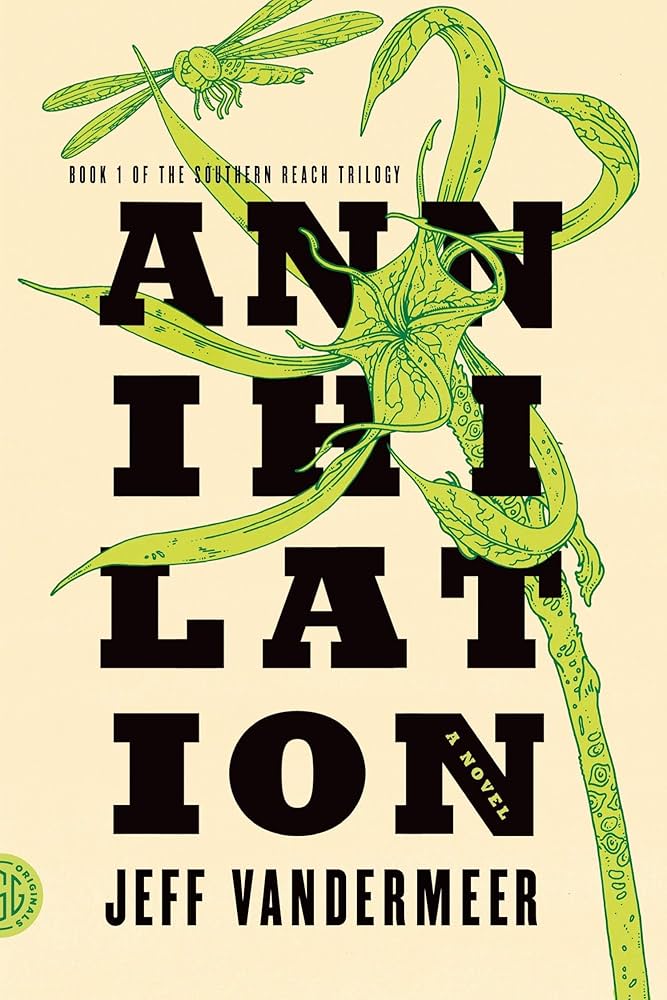
Annihilation- Jeff Vandermeer
While reading, I really liked the fact that the main character was a biologist! Her backstory was really interesting; as a child, she examined and analyzed the wildlife in her pool turned pond, and there was somewhat of a contrast between the biology that follows the rules of evolution we know and the creatures that inhabit Area X. There were some moments in the book that truly blew my mind; when the characters go down the tower, the biologist takes a sample from the walls made out of flesh. When she puts it under a microscope, they turn out to be human brain cells. WHAT?? It’s in moments like these where I think science fiction authors can include fake graphs or figures, to let the reader see what the scientist sees in the story.
I think Annihilation would absolutely go in the category of maze novels; though this novel doesn’t feature a maze, it has a tower, one where the deeper you go, the more horrifying and unimaginable things you see. The most direct literary comparison would be to the House of Leaves. In the House of Leaves, there is a monster that you never truly see, but you always feel its presence. It represents a very similar fear of the unknown as seen in Annihilation. As progressively weirder things happen thoughout the novel, as a reader, you can understand that there is a force behind everything going on, but you never really see what that is. Even when the biologist goes down the flesh tower and meets the entity, she can’t perceive what it is, because it’s that alien. Both the House of Leaves and Area X are spaces that don’t fit human definitions of space and logic (both structures expand and contract on a whim), and turns people’s fear of that unknown into a monster of sorts.
The specific brand of horror this book seems to cater to is cosmic horror. Because I watch a whole lot of video game playthroughs on Youtube, there were two specific games Annihilation reminded me of, the first being called Meat Madness. Basically, miners are sent to a planet made out of flesh to harvest meat to send back home, and when they usually die during the task, recovery specialists are sent to collect their DNA to create clones of them to send back to Earth. Throughout the game, you go deeper and deeper into the mining hole (which kind of resembles a tower…) and see miners in more and more gruesome conditions. You also get the sense that the planet is a living entity, some kind of intelligence you can’t perceive, and at the bottom of the pit, you become one with that entity. It’s eerily similar to Annihilation, because that’s basically what the biologist does; she goes to the bottom of the tower, meets the entity, and decides to roam Area X until she becomes one with it.
The other connection I thought of was Iron Lung, though this one’s a bit more vague. I’m specifically thinking of one of the locations the submarine has to go to (a point of interest I believe), where there is this glowing and beaming object that starts to bend the submarine in a way that defies physics. While all the other points of interest are extremely strange in this game, this is the only one that makes reality not feel real. The feeling of encountering that point is basically all of Annihilation.
I am quite liking this genre blend of cosmic horror and science fiction, so for the next month, I’ll probably go down that route! But yeah, I think Annihilation is an amazing way to be introduced to these kinds of stories.
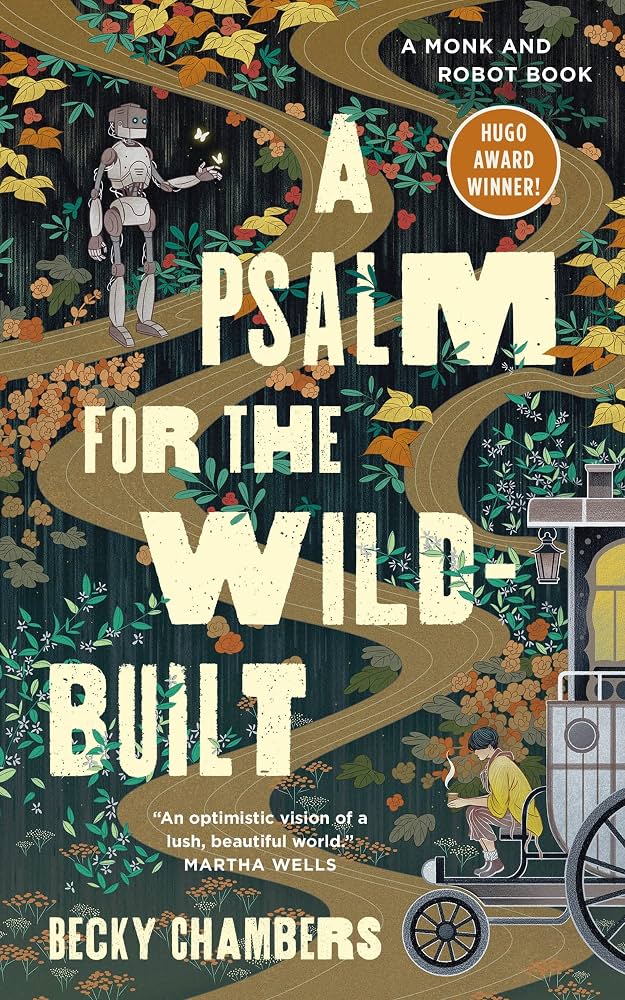
A Psalm for the Wild-Built- Becky Chambers
This was a pretty cute read, about a monk who is trying to find the purpose of their life. This is my first solar punk book, and I thought there were some really cool ideas brought up by the author. The monk’s wagon throughout the story is completely self sufficient, being able to generate and use its own energy. A kitchen, bathroom, bedroom, and shop all in one! Also, it was mentioned how the computers and tech in this world were specifically built to last a lifetime, a very sustainable initiative that doesn’t really exist today; the amount of times our “high tech” dish washer has broken down in the past couple years is insane. This was a very nice short read, a very sweet story about someone trying to find their place in the world. But it wasn’t really like stuck-in-my-head kind of good.
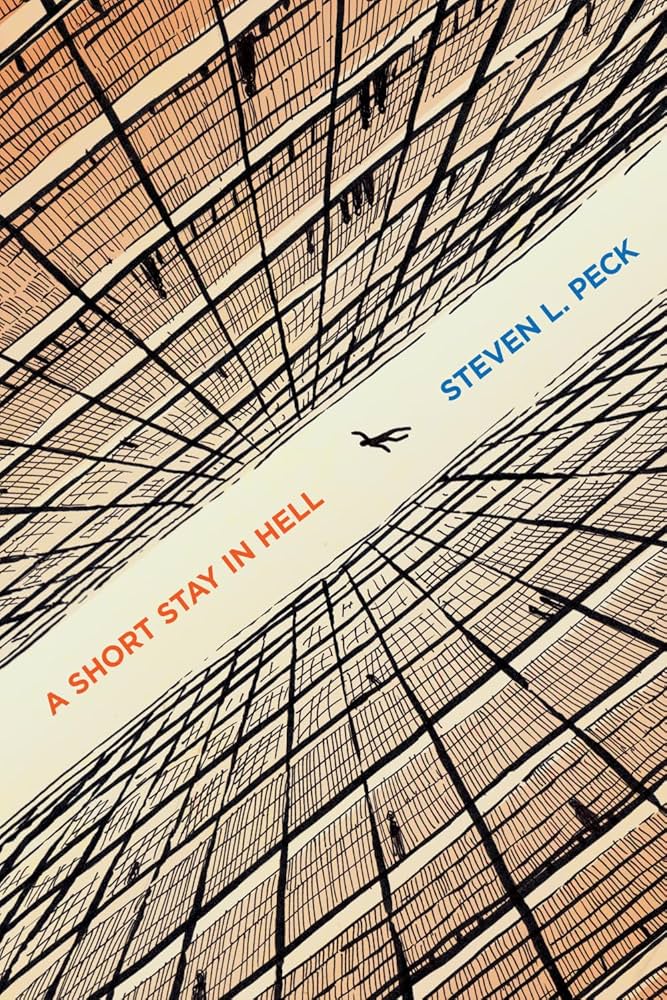
A Short Stay in Hell- Steven L. Peck
A Short Stay in Hell is literally Borges fanfic. It really interesting and the prose was easy to get through, but the original Borges story (The Library of Babel) was doing the heavy lifting. I just find it so funny that in this novel, the true religion just so happens to be Zoroastrianism and anyone who doesn’t follow it just immediately gets sent to hell. It reminds me of the Good Place where every single religion in world got the afterlife system wrong except for one dude named Doug Forcett who was doing shrooms. However, there is one thing that I don’t still particularly understand about this book: race. All the characters who are stuck in the same hell are white, and the only explanation the book gives for this is that this limits the viewpoints and variety of people you can meet to make the experience of being in hell more monotonous. I don’t think this makes any sense at all. There could have been a hell with just Mormons, or a hell with just people who worked as farmers. In fact, I think there would be more of a variety of lived experiences within a single race than within a group of people with say, the same occupation in their former life. I think making all the characters white is a pretty strange choice, but hey, maybe I just don’t get it.
Even though this book was entertaining, I think it ultimately doesn’t add much to Borges’s interpretation of an infinite library. In the Borges story, the inhabitants of the library are driven into depression and madness because the vast majority of the library is just gibberish. In A Short Stay in Hell, it just takes a really long time to establish how the main character becomes that hopeless. In around hundred years, a whole group of people only find a short string of random words! How could they possibly still not understand the magnitude of their task? It takes until near the end of the book when the main character meets a mathematician who calculated that the number of combinations in the library far exceed the number of electrons in the known universe. Yeah? I thought that was obvious? A deck of 52 cards has far more possible combinations than there are atoms on Earth. Compared to that, think of how many characters can exist in one book in the Library of Babel. That would have an even more absurdly high number of combinations. How can you be familiar with the Library of Babel and not immediately understand how unbelievably gargantuan of a task it is to find your life story in it?
I will say however that the one idea this book does contribute is the title itself. A Short Stay in Hell. At first glance it seems sarcastic, but when you think about it, when compared to literal eternity, the amount of time it would take the main character to find his life story would be a drop of water in an ocean. Yes, the main character would spend eons upon eons in hell, but it would still be a finite amount of time. After finishing his task, he would be off to heaven, which is presumably an infinite amount of time. I thought this was a pretty neat idea.
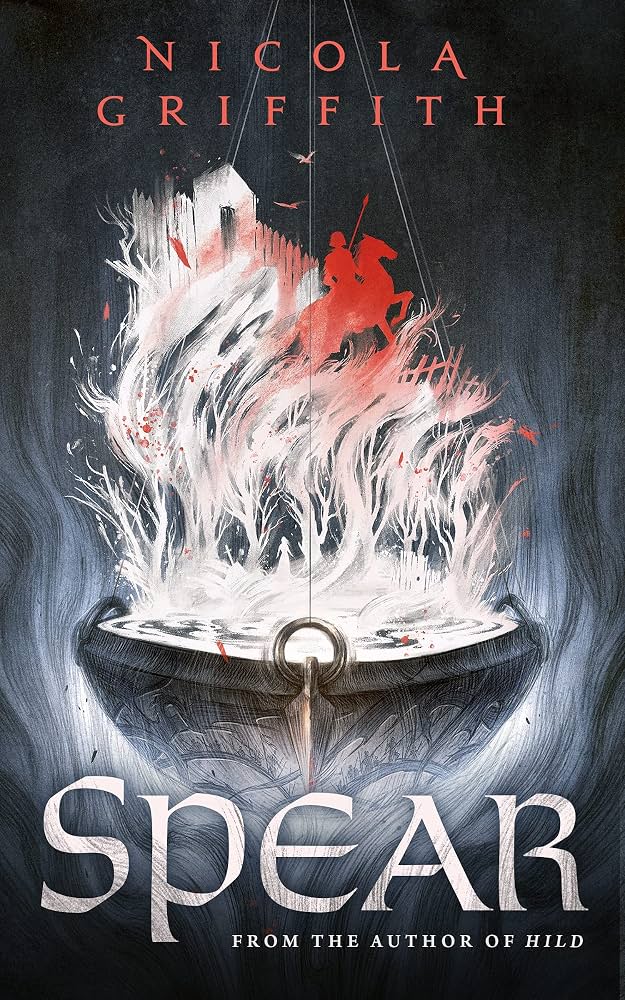
Spear- Nicola Griffith
I unfortunately don’t really have a lot of thoughts about this one. I found it through The Ursula K. Le Guin Prize for Fiction and thought it would be an interesting read, but I found it entirely too short. I really enjoyed the first half of the story, as Peratur grew up, learned about the world, had relationships, and fought her enemies; the prose was absolutely stunning, and I would have liked more of it. Towards the second half, I was confused about how Nimuë, the sorcerer, became such a big character. I would have liked more development in her character and in her relationship with Peratur, to make it more convincing. More scenes and adventures would have made the book longer and fleshed out the characters, which I think would make the book more appealing to me at least. More pointless side quests!! Please!!
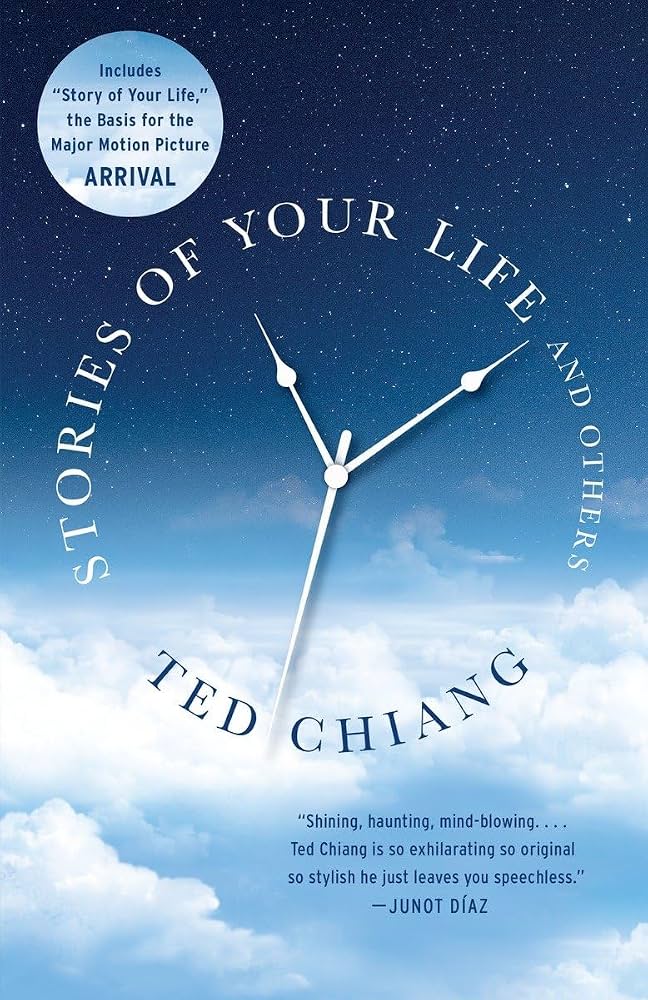
Stories of Your Life And Others- Ted Chiang
Oh my gosh, this book cemented in my head that Ted Chiang is THE greatest writer of short story collections, only comparable with Cixin Liu’s The Wandering Earth. The first story in this collection, the Tower of Babylon was my absolute favorite. It’s whimsical, mysterious, and genuinely unbelievable. Like never have I ever been able to so clearly see what the author is describing in words; I can so easily imagine the sun passing by the tower, the giant support pillars, the ceiling of the world made out of marble, and the reservoirs of water that exists within. The characters grapple with the religious morality of trying to mine their way upwards to god, and it brings up interesting questions. If god is silent while humans are continuing the task, is that him disapproving or approving of their efforts? People can interpret God’s words- or silence- any way they choose. The Tower of Babylon ends brilliantly! When the main character gets caught in a reservoir and swims upwards, he is met with air and land. As he continues up, he returns to the surface of the Earth. The entire place is a giant loop, a fitting ending for this story.
The next story was called Understand, and the only way to describe it is, boy that escalated quickly. A guy with brain damage receives an experimental drug to recover, and it gives him super-intelligence. While at first it is a recognizable type of genius, as he begins to take more of them, his genius becomes so advanced that as the reader, it’s difficult to comprehend. I have to say, Ted Chiang is amazing at imagining his way into being an expert at something. The main character creates an artificial language because human languages have limits, he can adjust his own hormones and bodily functions, and controls even his own thoughts. Chiang is able to write as if he has personal experience with these things, and I have no idea how he does it. The ending of this story was bizarre; the main character engages in a battle(?) with another drug-induced super genius, and when the other guy says “Understand”, the main character’s brain comes crashing down and he dies. What? But somehow, in a way I can’t explain, it made sense. Awesome!
The title work, Story of Your Life gave me deja vu, until I realized I watched the movie Arrival as a kid. Of course Ted Chiang is the one who came up with Arrival! He’s a genius! In this story, a linguist learns how to communicate with an alien species, and in turn, learns to understand how time isn’t linear. Through the alien language, she sees the story of her life, the joys of raising her daughter who would one day die young in (I think) a freak accident. But there is no way anyone can change their future. That is just the way the story of your life is meant to play out, and that’s what happens. Dang, this one was devastating.
The final story I’d like to talk about is Hell is the Absence of Gods. In this, several characters live in a world where the appearance of angels is akin to natural disasters, people are sometimes blessed with miracles, and those who have seen the light go to heaven. Except, it seems that these miracles and tragedies are pretty much completely random, and you still had to find a way to believe in God. Good things happen to bad people, and bad things happen to good people, the same as in our world. As the title says though, at least in the story’s world, you are close to God and his creatures. In Hell, there is no God and you have to spend your time worshipping him without him ever even regarding you. In this sense, the unconditional love for God that religious people often have and talk about is a hell in and of itself, because there is still no sign that you will be rewarded for your goodness, and that your suffering will end. Because again, miracles and tragedies happen to everyone.
Anyways, most of the other stories in this collection are repeats from Exhalation, which I have already talked about. But yeah, I really hope he writes more short stories! His collections are the best.
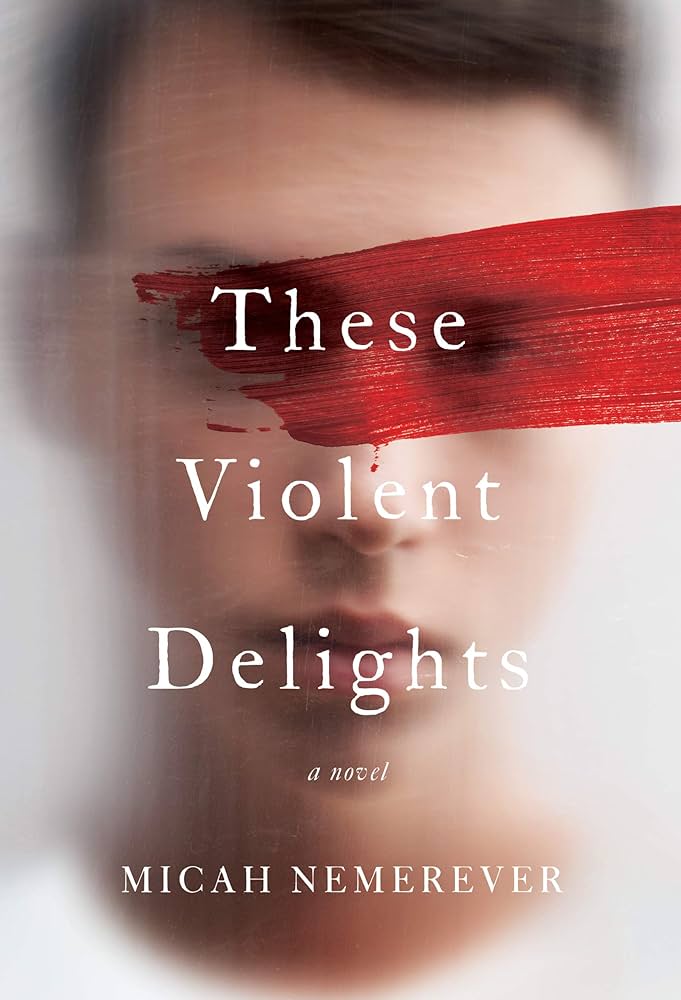
These Violent Delights- Micah Nemerever
This book has what I think are notable writing flaws, but the ideas are interesting enough that with some more development, it could be a really good book. Now that I’m going off to college, I’m trying to get used to the dark academia lifestyle, so I picked up this book. However, it didn’t exactly feel dark academia. There was way too much dialogue and characters trying to prove they are smart by dropping unrelated bits and pieces of information about a variety of subjects. There are scenes in the book of classroom discussions about ethics, where the dialogue is really stilted, unbelievable, and not really relevant to the plot. For example, the characters start discussing how scientific experimentation is good or bad, and the main character, Paul, drops the line:
“But you can’t impose morality from the outside.” Paul knew anger had seeped into his voice, but he didn’t care. “The whole idea of an infrastructure of ethical oversight is a symptom of the—the ‘failure of the scientific conscience.’ I’m saying there’s something about the way we conduct scientific inquiry that’s actually appealing to people who want to slice people up just to see what happens. Because they sure seem to do it the second they think the infrastructure won’t notice.”
Um, where is the evidence? Why are we bringing this up? This book has pretty much nothing to do with psychopaths being drawn to experimentation. It feels like these scenes are here to convince the readers that the characters are super intellectual, but it doesn’t really commit to the ethics and discussions brought up. Like, smoking schoolboys and random shallow philosophical discussions do not dark academia make. Rather, I think the author should have committed to one philosophical/intellectual idea and expanded on it deeply throughout the book. I think the perfect candidate for this, which is actually briefly brought up in These Violent Delights, is Plato’s Symposium. Paul and Julian should be placed in classes pertaining to hellenistic history throughout the book, and let’s say they’re analyzing Plato’s Symposium. The ideas of righteous versus evil love can be brought up and discussed vehemently by Paul and Julian as they begin to fall in love themselves. While they believe their love is righteous, the obsession and murders clearly tell us, the reader, that their love is the kind Plato warned against. I feel like sticking to one idea and exploring it deeply would have truly made this book dark academia.
I do feel however I’ve been criticizing These Violent Delights a lot so far. Genuinely, these books had some really good moments. The way Paul and Julian’s relationship is developed is very intriguing, and there were some scenes that were so shocking I had to close the book and take a walk. Because really, you’d think Julian is the one corrupting Paul, but no, Paul is an absolute freak too. The unreliable narrator was used really well, because I genuinely thought the insanity was one sided for the majority of the book. Towards the end, the pacing picks up and it’s genuinely a wild ride. But yeah, I think though it has flaws, These Violent Delights is a type of book (complex and intellectual representation) that needs to exist more.
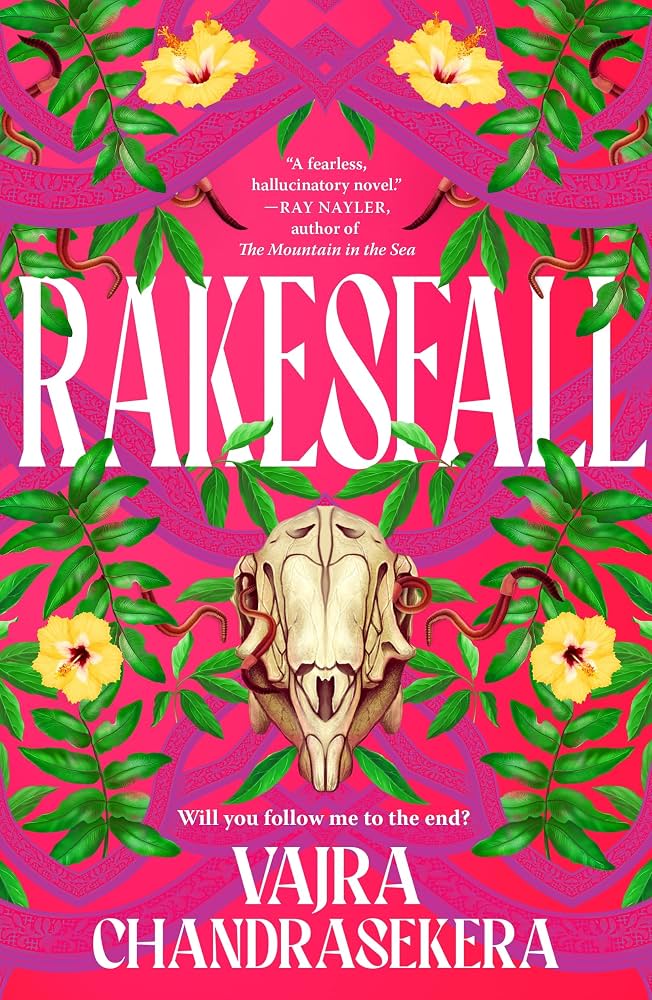
Rakesfall- Vajra Chandrasekera
Um I genuinely don’t understand what happened? It was like reading a fever dream. It was like watching a weird super old movie where the director comes up with bizarre visuals and its very loosely tied together with a theme except I’m not on the same plane of existence to understand what the hell is going on. Sorry, I literally don’t know what to say.
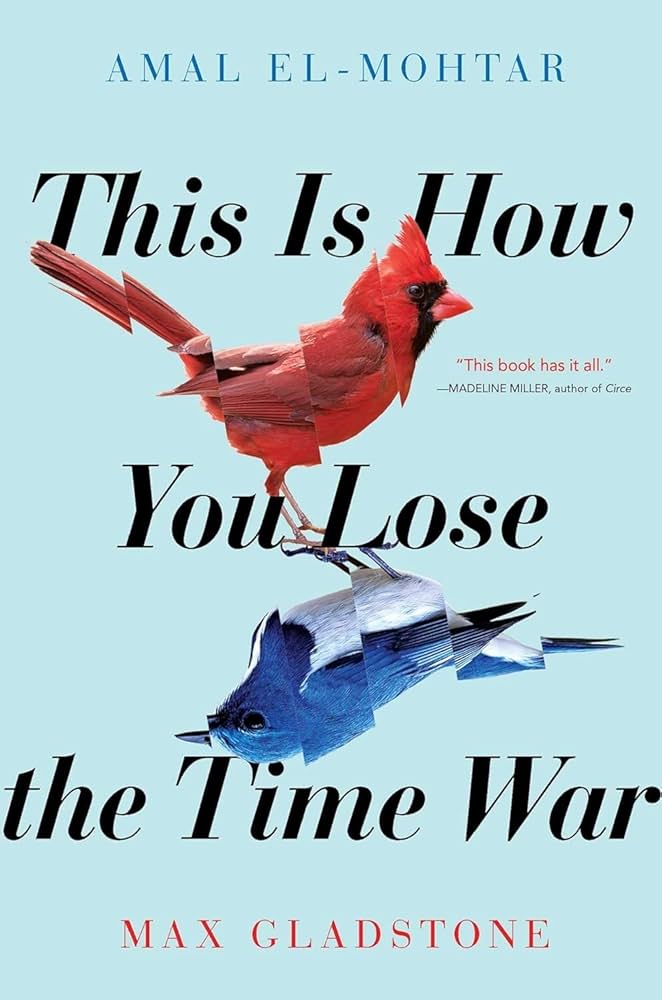
This is How You Lose the Time War- Amal El-Mohtar and Max Gladstone
Holy cow, this book was awesome. I’m pretty sure I tried to read it a couple months ago, but I couldn’t really get into it. But now? I think I was in the right headspace this month to tackle this short yet convoluted time travel love scene. The evolution of Red and Blue’s relationship and the things they wrote to each other were so cute, and when they declared their love to each other, bro, I literally got SHIVERS. Outside of the relationship, this book was really hard to understand. The characters were constantly in different settings, time periods, and doing different things. Like it didn’t make it harder to read the book, but it made it harder to understand the not-very-linear progression. But yeah, that’s about it for this one!
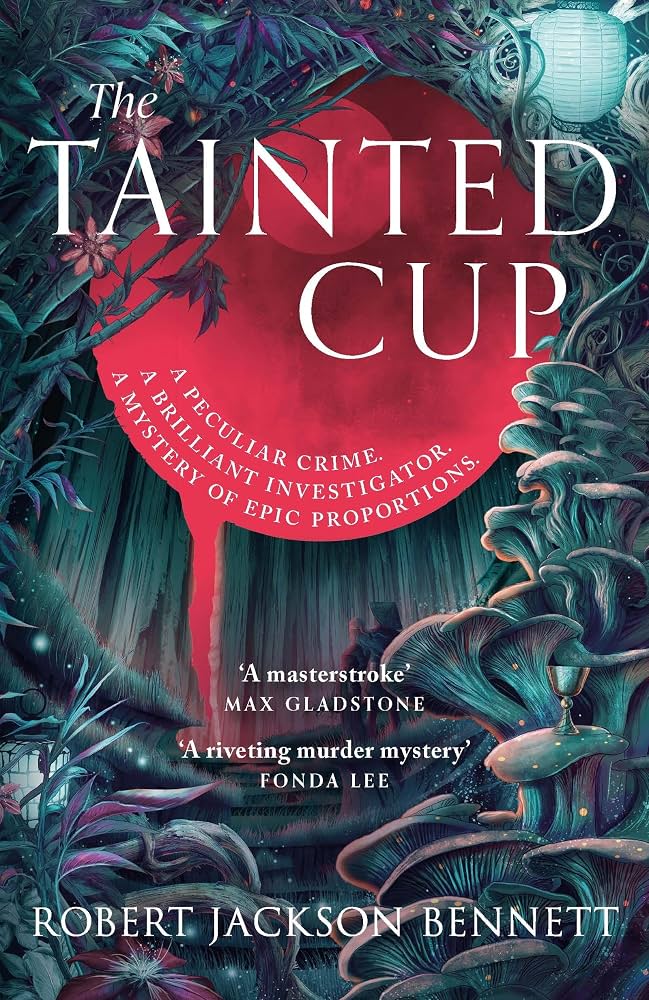
The Tainted Cup- Robert Jackson Bennett
This Sherlock-style murder mystery had some of the coolest world building I’ve ever seen! In this world, society is enclosed by Attack on Titan-style giant walls keeping dangerous Godzilla-style leviathans away. The book reminds us of the scale of the leviathans constantly, as characters travel past skulls the size of small mountains. People have extensive body-modifications giving them different superhuman abilities. The main character is a guy named Din enhanced to have perfect memory and recall, and he works with the eccentric detective Ana to solve a particularly gruesome string of murders. In these murders, a literal tree starts growing out of the victims, killing them instantly. This entire method reminded me of S1E1 of Hannibal, with the mushroom murders: IYKYK. God I love that show.
Also, it’s been a while since I’ve read a book that actually made me laugh out loud! Din and Ana are such endearing characters, and their constant remarks towards each other are genuinely funny. However, this is a good time to bring up the fact that I REALLY don’t like murder mysteries. I’ve never been able to get into them. Unfortunately, I don’t think this book was able to change that because I had a hard time following the plot, keeping track of different suspicious characters, and understanding the reasoning of the detectives. But again, that is literally just a me thing.

The Goldfinch- Donna Tartt
Jeez, this was such a weird book. I think it was my fault for not really liking this because I went into the Goldfinch expecting The Secret History, but it very much was not that. The Goldfinch is primarily a character study in its first half, and an art heist in its second. The first half was much more tolerable for me, although all the modern references really threw me off. I wasn’t expecting the main character, Theo, to be talking about taking AP classes or mentioning Fullmetal Alchemist! The novel felt like a documentary, following Theo throughout his childhood when he has no control over what’s going on in his life. He was just seaweed going where the tides took him. But in. The second half, when he is an adult, he suddenly starts explaining how he’s addicted to opiates? And is scamming people to sell them fake art? What? This turn in the narrative was when I genuinely couldn’t follow what was going on. But yeah, that’s about it. I don’t think this book is meant for me. I love pointless side quests, but only when they’re very far from the mundane. This book was an excellent character study of the mundane, but that’s why it doesn’t work for me.
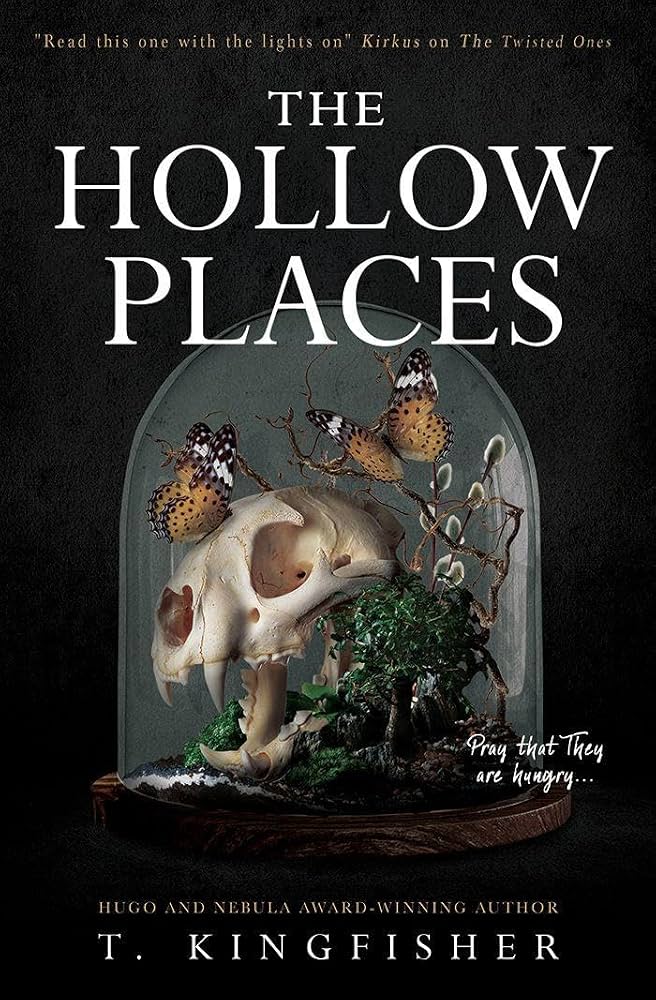
I have been getting recommended T. Kingfisher books FOREVER, and I’ve finally picked up this one! And yes, this absolutely classifies as a maze novel. The plot at first seems really cliche; after a divorce, a woman named Kara returns to her uncle’s home and starts working at his creepy taxidermy museum when she finds a hole in the wall. This hole leads to a hallway with a door that opens into a seemingly infinite body of water with small islands and tons of willow trees. And yes, there are creepy monsters there. However, this book is unexpectedly cozy and horrifying in a way I didn’t expect it to be. Kara and the guy who works at the coffee shop next door get stuck in that water place, and the things they see… absolutely bonkers. There is one scene where they find a school bus and Simon frantically tells her to get away from the seats. A couple hours later, they see shadows of children reaching out from those seats- if Kara had gone there, she probably would have died. But even worse is the bus driver. The driver is described as being like a 3D model of a 4D object rotating, which is genuinely so freaky. T. Kingfisher has a really good way of conveying the horrifying things the creatures there are doing without giving away too much information; enough is left for the imagination, which I think is very effective.
Again, about the book not being cliche, I love how the taxidermy is meant to contribute to the creepy atmosphere without being a nefarious presence. When the piece of wood causes the light of the willow world to enter the museum, everything the light touches comes alive. The wood possesses the giant otter and tries to attack Kara, but the other taxidermies animals brought to life throw themselves at the otter trying to protect her. This is because she truly adored her work and the animals at the museum, and they remembered when brought to life. I think that’s a cool subversion of the genre! Another interesting aspect is the deep friendship and bond the traumatizing experiences created between Kara and Simon. The development was very genuine, and I’m SO glad they had each other throughout the book- that’s the whole reason The Hollow Places was weirdly cozy! About this being a maze novel, the willow world absolutely falls into the nefarious category. The creatures that inhabit it want to either eat or horribly mutilate humans.
Anyways, I really liked this book, but I want to leave it on the note that the real horror was genuinely Kara not having insurance and having to superglue the wounds on her knees.