March Book Wrap-Up
This was an absolutely AWFUL month of reading, and there is only one book to blame for my slump. I plan on reading more of Susanna Clarke this month though, so hopefully I can get out of it! And as always, SPOILERS AHEAD!!!!!
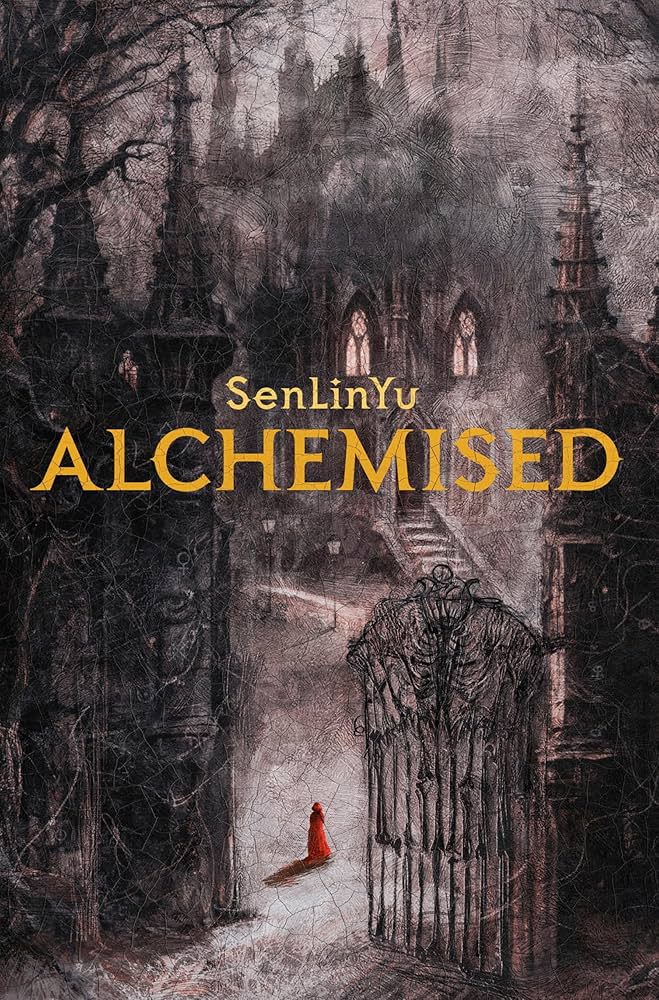
Alchemised- SenLinYu
For the past couple of months, every time I walked into the bookstore, the first thing I would see was a table display of Alchemised, and its absolutely gorgeous cover. Considering how big of a deal it clearly is (sold over a million copies??), I decided to pick it up and go in blind. For context, I don’t read a lot of fan fiction and I’m not familiar with the “Dramione” lore, so I tried to read and evaluate Alchemised as a stand-alone. However, I soon learned that’s not really possible, and this book put me in one of the worst reading slumps I’ve had in a while.
Alchemised was weird in the sense that after reading, I really didn’t know what to feel. I was pleasantly surprised with the quality of the writing and storytelling, but left very confused by the author’s intent; what kind of romance were they trying to portray? The answer to this question is vital, so let’s look at the two options:
#1: Ferron was abusive and the way he treats Helena is undesirable, but their relationship is realistic considering the emotionally taxing situation they both are in.
Considering this first option, I think that with immense structural changes, Alchemised could be a good book. This portrayal of a dark romance was extremely convincing to me when I read it; Ferron was undeniably horrible to Helena ever since they met. He treated Helena viciously and never gave her any agency, all because he ‘loved her’, and didn’ t want to hurt her. This combined with all the war crimes, killing of kids, and murder of citizens made Ferron an irredeemable human being. Yes, he has a terrible backstory and endured trauma growing up. He truly has no care for anyone but himself, and what he wants is Helena.
But it also makes complete sense that he and Helena fell in love with each other. Helena was destroying her wellbeing working for the resistance. This was an idea I thought was very well explored in the book; all the other soldiers in the resistance saw an equal share of successes and failures, but Helena, a healer, only saw people with horrific injuries and death. Everything beyond her tent was a constant losing battle from her perspective, and it explained how she was so mentally drained and hopeless that she would seek relief in a monster like Ferron. Helena was vulnerable to Ferron’s abuse disguised as love due to the psychological horror of war, and I don’t think I’ve read anything like this in fiction before.
Even though I enjoyed the romance aspect of the book (under the conditions of option one), this book was immensely difficult to get through because of the structure. Basically, there are three parts:
- After the war
- During the war
- After the war again
I’m sorry, but the entire first part needs to go. It is literally just Helena being imprisoned, things getting worse, and worse, and somehow even more worse. There is no reason for this part of the book to exist, because it adds absolutely nothing to the themes I talked about before, and doesn’t bring in anything new from the Handmaid’s tale, the book it was adapted from. It was uninteresting, and quite frankly, sadistic without reason (I’m looking at you, SA scenes). I would much rather have the story be a linear progression through the war and their budding relationship. But if the author really wanted to do time skips, it would be way more interesting to read about Ferron and Helena’s time in school together! That’s an important part of their relationship that is currently explained through telling rather than showing, so it would be cool to read more in depth about that.
Aside from the structure and romance, I will generally say that I liked the ways the other characters were written. The complexities of good and evil when it came to war were explored very naturally for the most part, the notable exceptions being the two times Helena literally states “ohhh so maybe there isn’t a good side and bad sideeee”. That was way too on-the-nose. Also, the book wasn’t afraid to be gory, violent, and gross.
This entire part of the analysis was written with the assumption that the first intent with the romance was the correct one. I believed throughout reading the book that I had evidence to back that up- until the ending, which made me question everything. Let’s look at option #2.
#2: Ferron only treated Helena horribly because he loved her, his sympathetic backstory absolves him of his war crimes, and makes the relationship they have desirable.
At the end of the novel, Ferron and Helena want to escape the post-war country, live a peaceful life, and raise their child. And to my horror, they succeed. Helena deserves a happy ending. This woman has been through FAR too much trauma for one lifetime, and if raising her daughter on an island is what she wants, she should get it. But Ferron doesn’t deserve anything. This man is responsible for the deaths of hundreds, even thousands of innocents, but he gets to run off to an island and be happy? And when I say ‘be happy’, I mean remain in a relationship with Helena and abuse her further? Yes, I understand that Ferron was ordered to do a lot of the killings, but at a certain point, when a person causes that much death and destruction, they have to face the consequences of their actions.
The ideal ending would be Helena escaping and Ferron being killed or dying on the way. This way, Ferron gets his karma, and though Helena will initially be heartbroken, she will learn to stop being dependent on Ferron’s abuse, heal from her trauma from the war, and become a stronger and confident individual capable of raising a healthy daughter. But the fact that the author didn’t give us that ending made me think that intent #1 was all in my head. Maybe, I’VE been the delusional one all along and Ferron is a version of the standard male love interest found in 90% of dark romance books. I decided to check online what people are saying, and lo and behold, people are in love with Kaine Ferron.
If we as the reader are meant to fall in love with Ferron, this book has nothing. This book is a waste of time, all the writing, characterization, exploration of psychological trauma, ALL OF IT is useless if in the end, Ferron is worthy of a calm and peaceful life, not facing the death and destruction his actions have caused.
I’ve never had such mixed feelings about a book before, but if Dramione fanfiction entering the publishing industry is the trend for the next couple years, I don’t think I’m too excited.
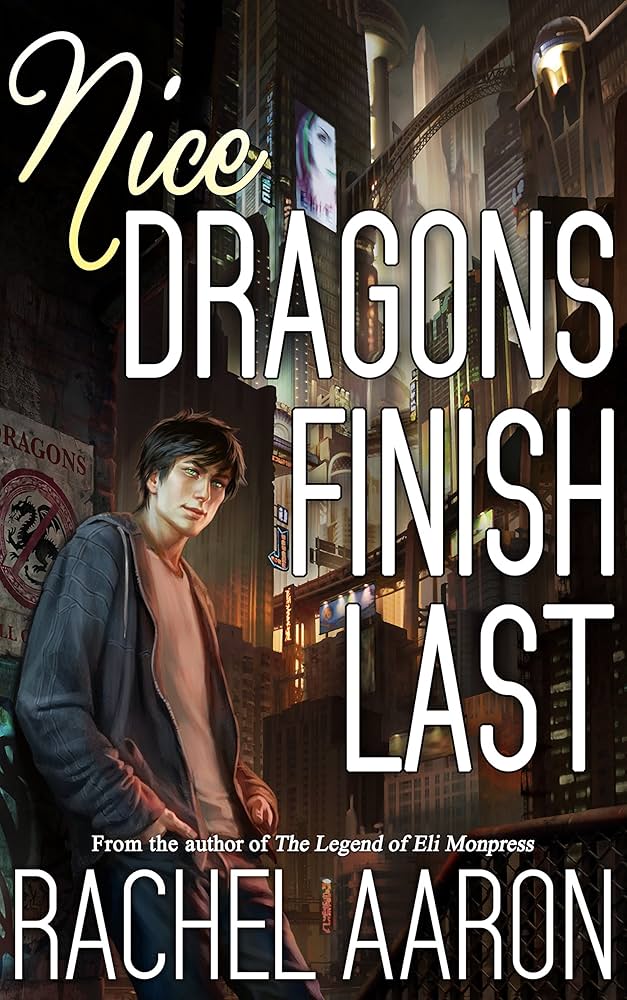
Nice Dragons Finish Last- Rachel Aaron
After the slump Alchemised put me through, I needed a short and sweet novel to resuscitate me. I only picked up this book because I thought the title was hilarious, but it turned out to be the perfect choice! I think the genre is urban fantasy, but it reminded me so much of the Percy Jackson series, from the main character to the writing style.
Considering the title, it’s obvious that the book is about a really nice dragon, but I was genuinely surprised how nice he would actually be. Remember the Superman movie that came out last year? That’s the kind of happy and hopeful vibes the protagonist, Julius, had. I felt so bad for this guy, stuck in a family full of narcissists and psychopaths who think him existing peaceful is an offense worthy of death. At one point in the book, he was so moved by someone actually treating him nicely for once that he nearly started crying!
Anyways, the characters and adventure in this book were really fun and reminiscent of stuff I read as a kid in the best way possible. It was exactly what I needed after Alchemised, and hopefully I’ll read more from this author in the future!
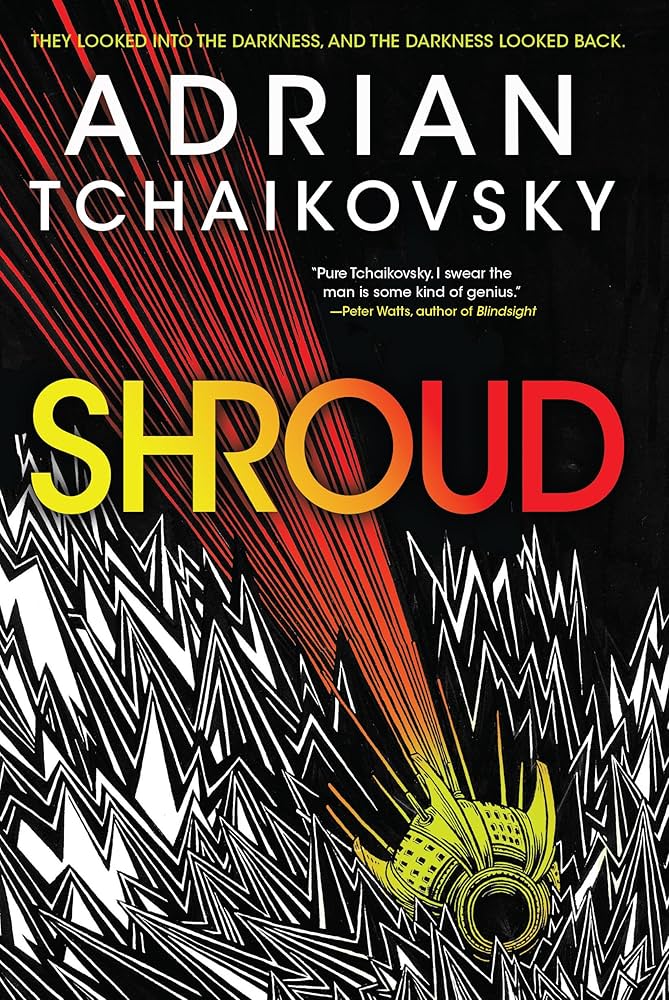
Shroud- Adrian Tchaikovsky
Nothing like a little doomed yuri to top everything off on this month’s VERY short list! I decided to randomly put a holds on different science fiction books I’ve seen floating around, and this is one of them. In Shroud, an explosion on a spaceship causes two people to escape in a pod that topples into the dark atmosphere of a planet called Shroud. They are faced with trekking across an alien planet in their pod, with shifty creatures whose motives they know nothing about lurk beside them.
The biology of these aliens were very interesting to read about, but I will say, the hive mind aspect was a bit predictable. I don’t know how, but I thought of it pretty early on, so the reveal wasn’t that shocking. However, I will say that the ending was very surprising but fitting.
Throughout the story, Juna was seen as a useless team member because she just mediated conflicts and communication. But it was this trait that allowed her to work with Ste Etienne and survive on Shroud. And ultimately, she became the connecter and means of communication between the hive mind on Shroud and the rest of humanity.
I am really liking this genre of hard science fiction, so I’m definitely going to keep reading more! It’s fun doing research outside of the book on these scientific concepts, and I like implementing what I already know to theorize about what’s going on in the book.