February Book Wrap-Up
February was my best reading month in a long time. I have read some of the most eye-opening works of literature, and I believe I have become a better person for it. Let’s get started, and as always, major spoilers ahead!
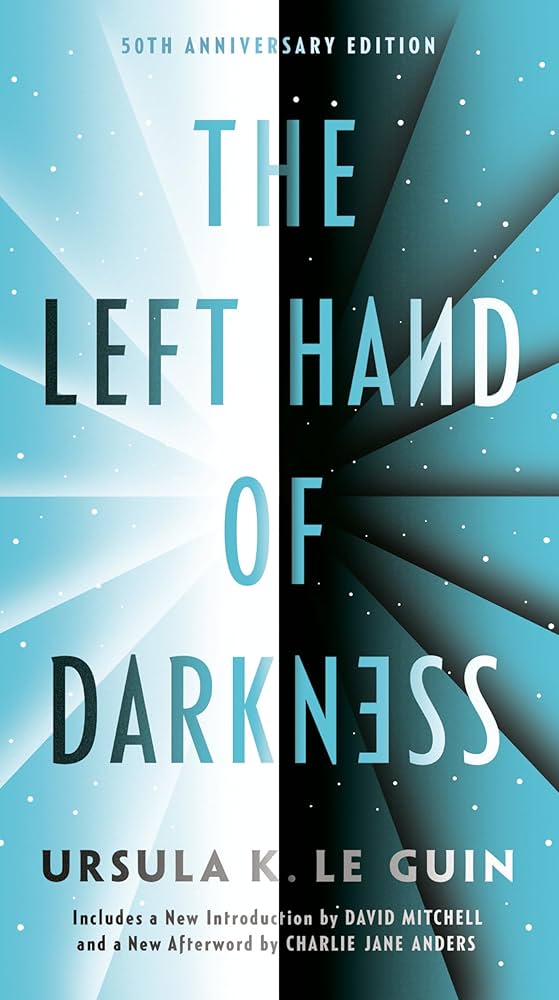
The Left Hand of Darkness- Ursula K. Le Guin
This book broke my heart. The story follows Genly Ai, a human envoy sent to an icy planet to befriend the locals and ultimately have his crewmates come down to the planet if it’s safe. The people on the planet are humanoid, but are androgynous; this fact influences the psychology and structure of the entire civilization. Genly gets confused by their culture because he is a human man, and also has to face complex political workings that his arrival set forth. The first half of this book meanders around politics and culture, and was honestly a bit difficult for me to get through.
However, midway through the story, everything changes. A politician decides to get rid of Genly and sends him to a prison camp enclosed by icy wastelands in all directions. Out of nowhere, the situation is deadly and hopeless. But one of the politicians who was on Genly’s side, Estraven the Traitor, travelled all the way to save Genly. The second half of the book is a love story, as the two get to understand one another on their months-long trek through glaciers and blizzards back to civilization.
The tonal shift changed everything for me. A really confusing story became very clear in the second half, and that’s where most of the commentary on gender occurred. As a man, Genly perceived the androgynous people as mostly male, and refused to recognize the full humanity of Estraven. Throughout the book, he had to learn how to appreciate all facets of his companion’s character. But this review started with me saying this book broke my heart. I won’t say what happened, but I was devastated. It was abrupt. It felt meaningless. Ursula Le Guin was a genius for that.
For me, the moment where the book shifted my perspective of the world was when Genly’s spaceship landed and he met the other humans. Immediately, the gendered behavior of the people struck me as unbelievably unnatural. After getting to know the androgynous humans, it felt like what would be considered normal human beings were actually extreme and… almost alien.
I learned so much from this book about humanity as a whole, and it was a devastating yet enjoyable experience. I cannot recommend it enough, and moving forward, I will be reading more from Ursula K. Le Guin.
Twisted Love- Ana Huang
Remember how I said Genly seeing his human friends after staying on a genderless planet for a long time made him feel weird? I felt super weird reading Twisted Love the same day as finishing the Left Hand of Darkness. The best way I can express the experience of reading this book is peacocks frantically running across a yard screeching
oH LoOk hOw MASCULINE and SMART I aM or oHOOh I aM a DaInTy LiTtle HapPy SuNShIne PRINCESS i WaNt a BIG STRONG MANLY MAN to CoNtroL mY LIFEEEEE
But seriously, I was so flabbergasted by this book I wrote a whole essay on it, which I will link to this blog. So I’ll just make two points. I can’t believe the main dude just goes out and brags that he’s smart because he has an IQ of 160. It’s so weird that he thinks of himself more as a full human being than the girl based on this fact alone, that he knows what’s best for everyone because of his super manly logical brain. And also, him buying all of the main girl’s paintings because he wanted to make her feel confident is actually delusional. Dude has an IQ of 160 but can’t understand how insulting and infantalizing this is.
The first half of this book was so bad it was funny, but the second half gets into mafia-esque conflicts that nobody wanted. At that point, it wasn’t even laughably bad, just simply an unenjoyable experience.
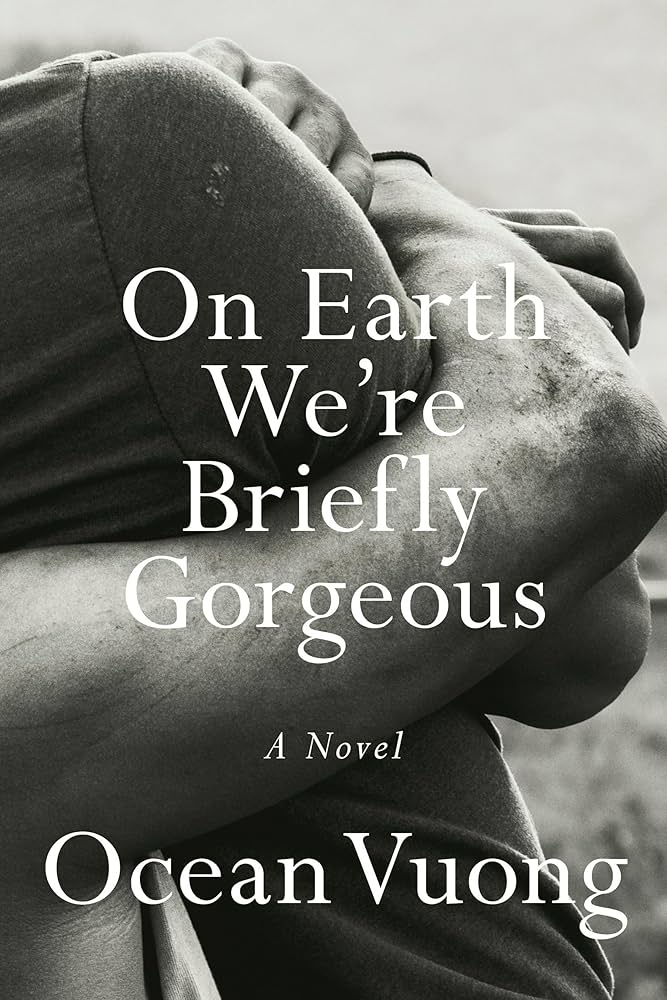
On Earth We’re Briefly Gorgeous- Ocean Vuong
The prose is absolutely gorgeous. Ocean Vuong has a way with words, and there is no denying that. I just think for me personally, the writing style became too much because it was stretched throughout an entire book.
The book did a really good job at conveying the lives of the characters through bits and pieces. Told in first person through letters, Little Dog is the main character. He writes about his mom Rose’s struggle with PTSD from the Vietnam War, his grandmother Lan’s mental illness and time in Vietnam, and Trevor, his first boyfriend who struggled with addiction.
My only complaint, however, is that I learned nothing about Little Dog himself. I don’t really understand who he is, what his motives are, or even why he writes with the style and prose that he does. I feel like fleshing out this character would have made the book better for me at least.
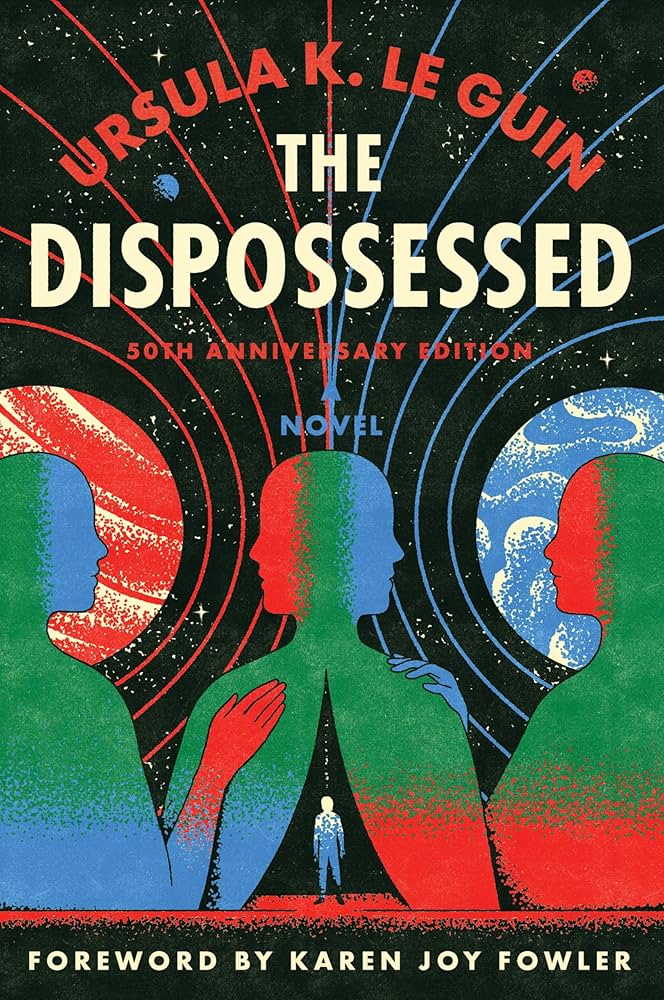
The Dispossessed- Ursula K. Le Guin
My next Ursula K Le Guin book! I absolutely loved this one too, and I think it had immensely interesting worldbuilding.
Basically, there are two planets. One is capitalist, while the other is completely anarchist. Our main character Shevek is a physicist from the anarchist planet who wanted to see what the other world was like. Though the anarchist world is scarce in resources and poor, people there are completely equal. If famine occurs, everyone suffers equally and people do their best to help each other out. However, in the capitalist world, luxury exists side by side with suffering due to inevitable class differences.
This book had very interesting ideas on free will; in an anarchist society, you can theoretically do whatever you want. This is inherently problematic, so rules are built into the psychology of the anarchist people. They can choose to not work but they don’t, because they are psychologically conditioned (through normal parenting, all kids are psychologically conditioned) to prioritize the group over the individual. This is why even though I think this society seems plausible and even a good place to live, I would never be able to adapt to the mindset. I’m too much of an ‘egoist’ and ‘propertarian’ for that!
Gender was also really interesting in the worldbuilding of this book. On the anarchist planet, women and men are equal but also different. Boys and girls often play amongst themselves and sometimes Shevek expresses his inability to understand the opposite sex. However, there are no barriers for women or men to do whatever they’re good at. For example, women can absolutely do physics or hard labor if they want to, and being gay is very accepted and natural.
By this point, I was absolutely convinced Ursula K Le Guin was one of my favorite authors of all time. I can’t wait to start Earthsea soon!
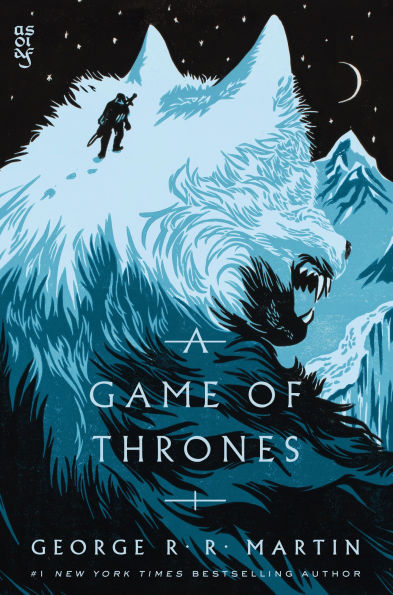
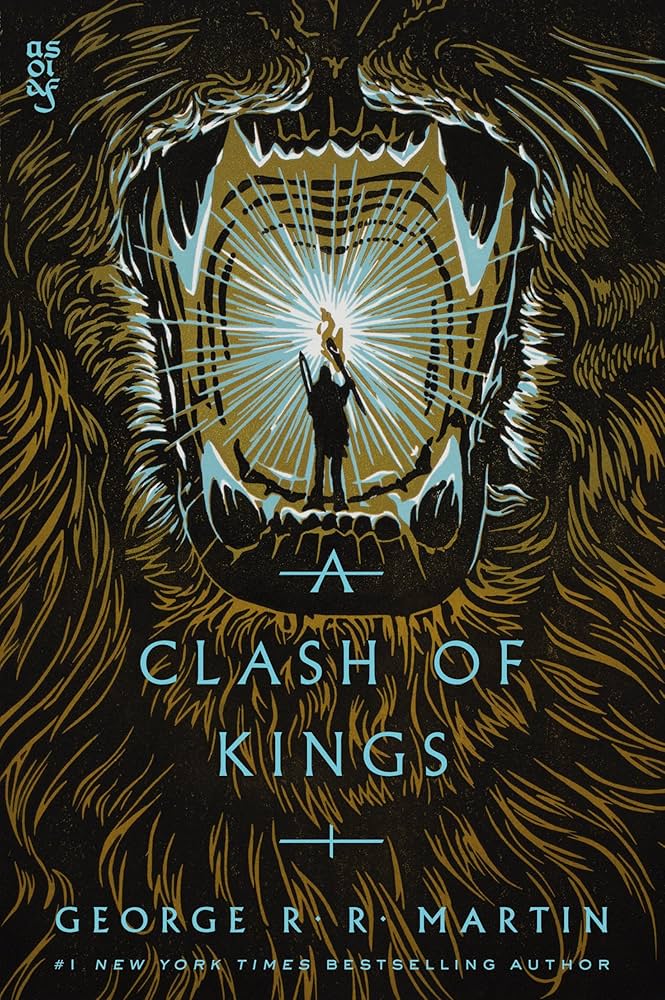
A Game of Thrones and A Clash of Kings- George R.R. Martin
This is one of the most engaging fantasy books I’ve read in a long time. Each chapter had me absolutely hooked for the next one. It’s terribly sad how young all the characters are, and how they get involved in the horrible decisions of the adults. I will absolutely be continuing the series, but it’s going to take a while because each book is MASSIVE!
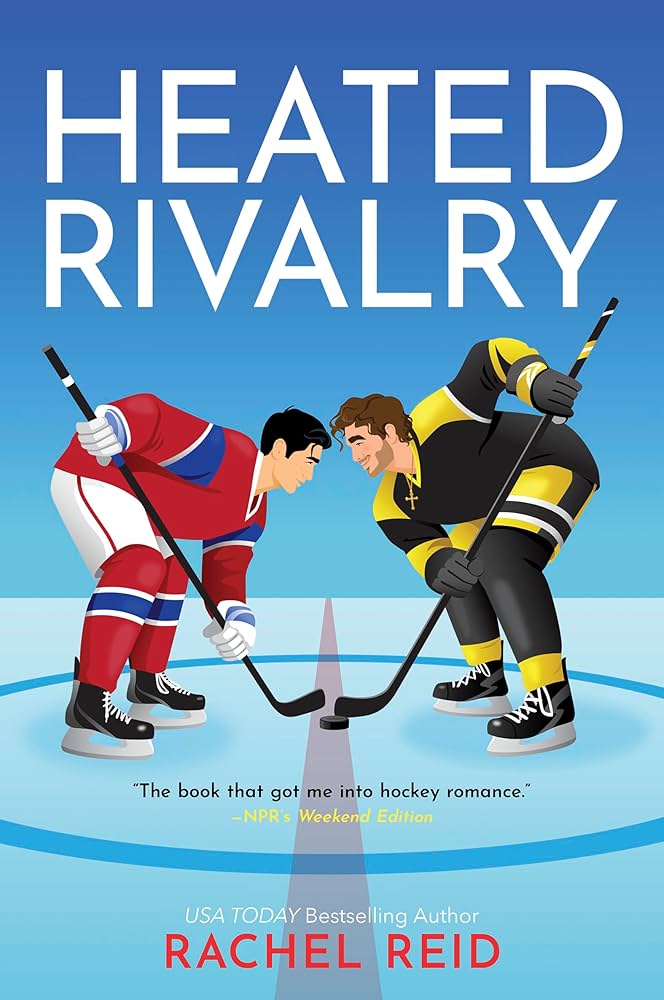
Heated Rivalry- Rachel Reid
Ok, ok. I followed the trend on this one; I’ve heard about the show everywhere, and I decided I should take a look at the source material especially because it was free on Hoopla. But honestly… The book was pretty terrible. The prose was poorly written, there was way more dialogue than description, and that dialogue was very stilted. The average romance novel has better characterization than this book. I have no idea why the show was based on this rather than any one of the countless other hockey romances there are.

Kyrie- Poul Anderson
Now, this is not a full book, but rather a science fiction short story. I thought the idea and the science behind it was really interesting! It’s just the execution that didn’t work for me. The structure of the story was very blocky; the story started with a chunk in the distant future, then a small chunk introducing characters in the present situation, then a chunk of infodumping the science, and then an explosive and tragic ending of doomed lovers. Because of the blocky structure and lack of character development, the ending didn’t hit as hard as it should have, even though the idea was amazing.
However, this story did leave me intrigued enough to add the author’s other books to my TBR. So I look forward to reading more long-form stories from this author!
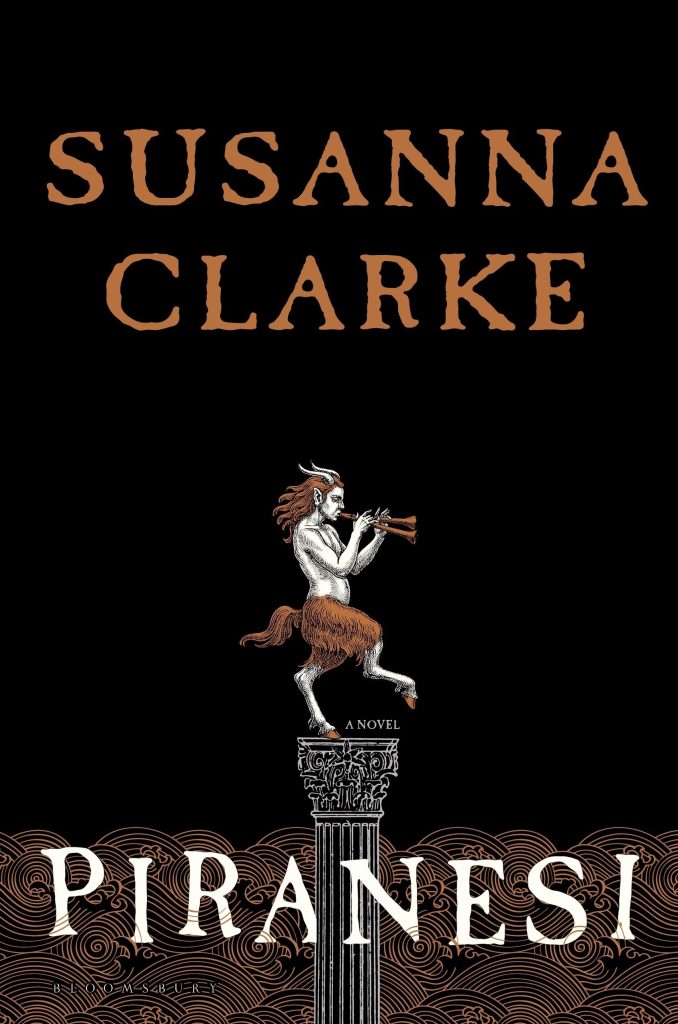
Piranesi- Susanna Clarke
This list is in chronological order, but the saying “save the best for last” really applies here. Piranesi is one of the best books I have ever read in my life. You know it’s good when you start to tear up in the end. Even though the story is immensely short, it does my favorite thing ever that I admittedly talk a lot about on this blog. It utilizes POINTLESS SIDE QUESTS. These are my favorite things ever, because the plot isn’t progressing and we just get to wander the beautiful world the author created without having an objective.
Piranesi is about a guy named Piranesi who lives in a labyrinth. He quite likes it though, going fishing, doing his rituals for the skeletons lying around, calculating the tides, and documenting the countless statues that are displayed in the walls of the labyrinth. There is one other person who lives with him, The Other, who is looking for the secret to everything, and Piranesi helps him out a lot.
By the end, Piranesi discovers that he was forcibly brought to the labyrinth and kept there by The Other. The only reason he didn’t know was because the labyrinth messes with memories. It’s horribly tragic that he was basically separated from his past life and family for years because he investigated the wrong person. But it’s also strange that being in the labyrinth changed him possibly for the better, giving him a better love, appreciation, and understanding of the world around him. I still don’t know what to make of that.
We get to live in Piranesi’s life through these pointless side quests, learning about his favorite statues, the scariest rooms, and prophetic movement of birds, and the day an albatross came to the halls. As a reader, I got to understand the full infinite breadth of this labyrinth through this book, and I am so grateful I can think back to this experience whenever I want to escape everyday life.
On a side note, there are many details in this book that I find very interesting, the first being the statues on the walls of the labyrinth. Every statue is different, and they show a variety of different subjects. In the book, Piranesi believes that when birds circle around specific statues, those statues signify a prophecy depending on the subjects shown. This is remarkably similar to Lyra reading an alethiometer in Philip Pullman’s His Dark Materials; both cases involve unknown forces in the universe picking a combination of symbols to convey complex meanings.
Additionally, the labyrinth in Piranesi is reminiscent of The Library of Babel by Borges. Instead of shelves upon shelves of every single book in existence, Piranesi’s labyrinth contains statues of every idea imaginable. Borges’s story is depressing because almost all the information is useless and there is no way to find meaningful truths of life among the jargon. However, Piranesi is a more optimistic way of looking at the same situation. Yes, there are infinite statues and infinite ideas and there is no way to know everything. But that is the beauty of the labyrinth– understanding as much as you can and appreciating the process because trying to find a universal truth is futile.
The last comparison I will make is to Plato’s theory of forms. The ideas we see in the real world are imitations of perfect forms according to Plato, and I admit I have never understood what Plato meant by this until I read Piranesi. The forms are the statues within the labyrinth; each of them represent an idea which you can find in the real world. In the book, Piranesi has a superior understanding of the forms due to his years of observation in the labyrinths. So when he enters the human world, he can recognize those forms in other people and appreciate the world around him better.
Finally, I really appreciate the link between science and spirituality this book offers. I feel I am finally on the track to understanding what people mean when they talk about ‘being connected to the universe’ or ‘universal energy’. There is absolutely a science to spirituality, and denying it feels closed minded at best and plain wrong at worst.
Basically, this book is one of the best I’ve ever read in my life. I love everything about it, and it deserves all the attention in the world.