January Book Wrap-Up
Hey there, we’re trying something new! I have read way too many books in a short period of time, so there’s no need to make a separate post for each one. Hopefully, I can spend more time reading books now that it’s the second semester of senior year; let’s get started! And as always, spoilers ahead.
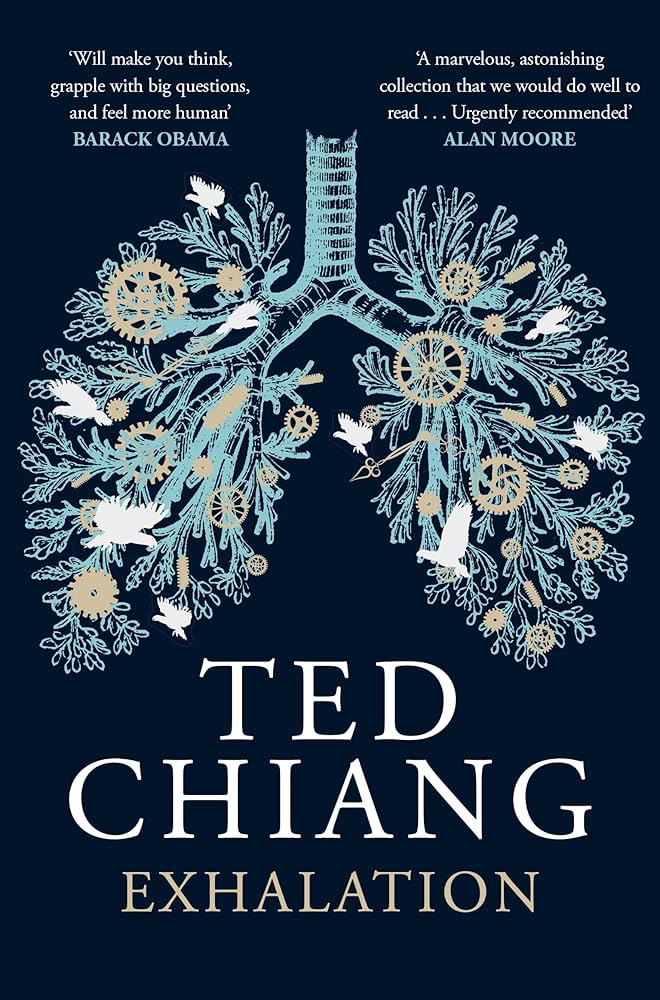
Exhalation: Stories – Ted Chiang
This was a phenomenal science fiction short story collection. While The Wandering Earth focused more on what the ambition of humanity should be, Exhalation is more about what it means to be human. And I feel like Chiang does an amazing job of that. All of the stories were unique and thought-provoking in their own way, and in each one, there is a specific moment where a light bulb goes off in your head: Oh, so this is the point of the story! Each time this happened, I felt like I learned something truly new about myself. In this collection, there were four stories I especially enjoyed.
Exhalation: The title story has an image in it that’s stuck in my mind; a scientist controlling a remote device behind him to dissect his own brain. When I think of this short story collection, this is the first thing I think of, and it’s absolutely brilliant.
The Lifecycle of Software Objects: No short story has made me feel as uncomfortable as this one, but it raised very important questions. These software developers can choose to keep the digital animals as children, or to make them grow up to be sold to people ‘seeking relationships’ if you know what I mean. One argument is that the digital animals are like human children; it could be wrong to keep them in that child state forever, even though growing up and becoming independent can expose them to harm and manipulative people. However, I’m of the opinion that digital animals being sold into relationships with humans is inherently not a real opportunity for connections, because relationships are also about making sacrifices. A software saying yes to your every command is not a true relationship because the software isn’t asking you to do anything for them.
The Truth of Fact, The Truth of Feeling: With the current technology of ChatGPT, I feel like this story offers a view of the situation I haven’t heard before. The story’s society uses these glasses that record every moment of a person’s life. If people don’t remember things, it pulls up footage. Soon, these glasses are integrated into human thought itself. The main character is against these glasses because of this dependency- and understandably so. But soon, the author goes back in time and space to make us question this. The invention of writing takes our thoughts and puts them on a document. Our society can only run because of writing, and that is both a good and bad thing, just like the recording glasses. Ultimately, a tool is a tool; it’s what we choose to do with it that matters. Saying that “our minds are getting corrupted/lazy” is not as simple an argument as people think it is.
Anxiety is the Dizziness of Freedom: First of all, this title is perpetually stuck in my head. Apparently, it’s a quote by a Danish philosopher, and oh boy is it true. Basically, this story is about a device that splits the timeline and can exchange a certain amount of information across the realities. In one reality, the light turns red, and in the other, the light turns blue. This first difference causes a cascade of events starting at the molecular level, ultimately causing different global climates and completely changing humanity. The different characters of this story grapple with the amount of choices they can make and the meaning behind it all. It’s difficult to explain what the lightbulb moment was, but reading this story was truly a spiritual experience.
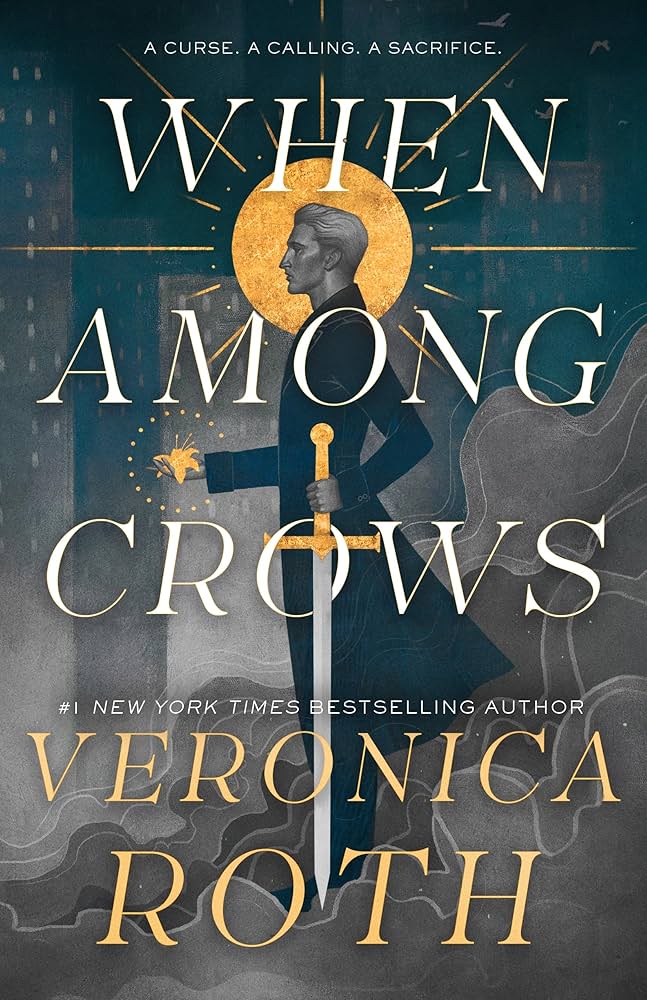
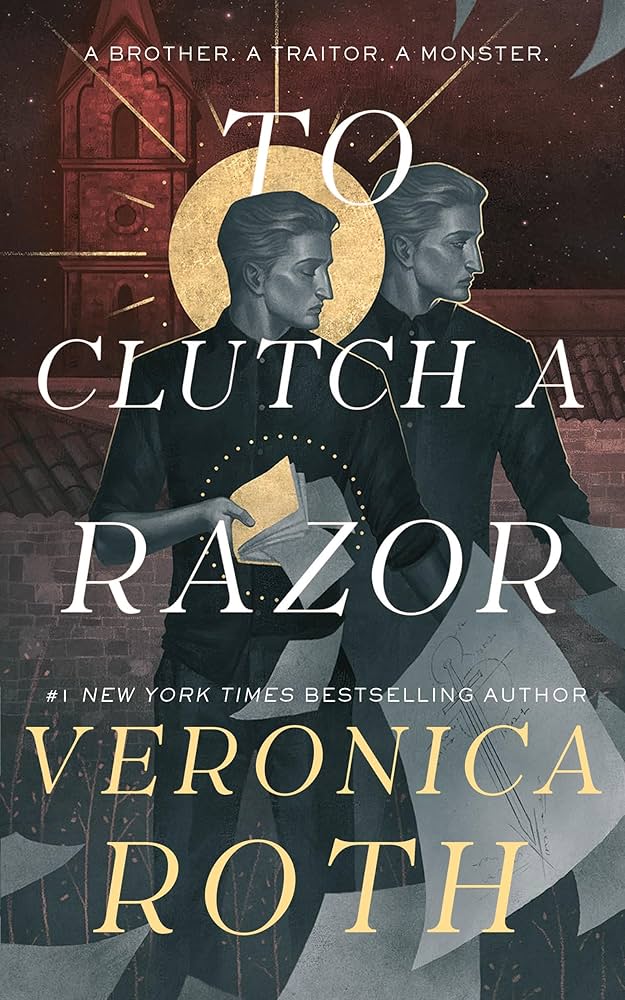
When Among Crows, To Clutch a Razor – Veronica Roth
Um, so, I had no idea this was by the author of Divergent? Now I’ve never read the Divergent series, but everything I know about it is that it’s poorly written, has shallow characters, and is one of the many Hunger Games knockoffs of the YA dystopian era. But to stress this again, when I read this duology, I had no idea it was the same author. In fact, I rather enjoyed these books!
The world building was by far the best part. All of the magical beings were inspired by Slavic mythology and folklore, and it felt like the main characters were a small part of a whole world of magic; this mystery created a deep and dark atmosphere that I loved a lot. I enjoyed the complex gender hierarchies, the societal roles associated with each type of being, and the way that all this was developed in such a short amount of time.
Also, the character design and development was fascinating; I could imagine them walking and talking and living their lives. A comparison I wanted to make was with Water Moon; I complained so much about how the author telling us the love interest was attractive was not a character description; rather, we should learn objective traits. This duology does just that. The main character, Dymitr, is described as have big lips and floppy brown hair. These are traits that allow us to objectively imagine what he looks like and makes him feel more human. We learn that other characters find him attractive when they tell him to his face (ahem, Niko). I know that this was a really small detail, but it’s one of the things I clearly remember about the book.
The only flaw I can think of with this book is that it’s too short. But that’s a pretty big flaw. The plot and the character development is so tight that it barely has any time to breathe, and if each book had another 100 or 200 pages, it would have been able to flesh out things even more. Again, pointless side quests are really important for the reader to just exist in the world.
But overall, definitely a pretty good read!
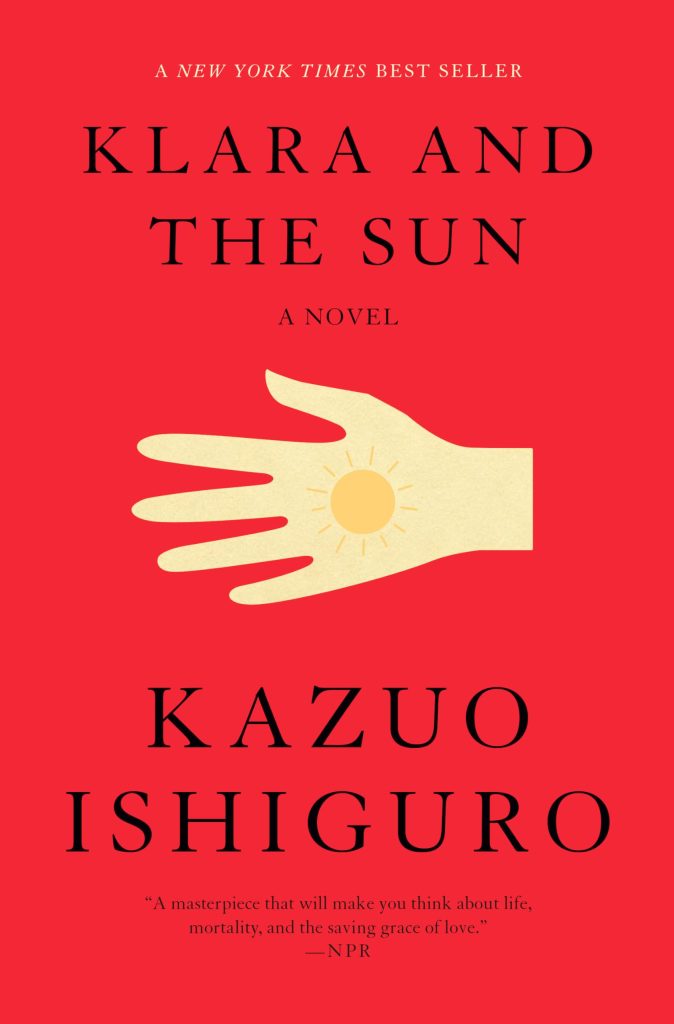
Klara and the Sun – Kazuo Ishiguro
What does it mean to be human? This is a question all humans have asked, and many writers have tried to answer. But after reading this book, I am under the impression that Kazuo Ishiguro actually knows what he’s talking about. In this book, we see the world through the eyes of Klara, a robot designed to befriend children. However, the child who purchases Klara is terribly sick and may not live long. The NPR quote above summarizes what this book is about better than I can, but I want to talk about the question I stated in the beginning. Humans are ultimately mechanical and don’t have an actual soul, so it’s possible to imitate human behavior to perfection. However, what would be missing is the piece of that person that exists in those who love them. This is the point that Ishiguro makes, and the point I believe got him that Nobel Prize in Literature.
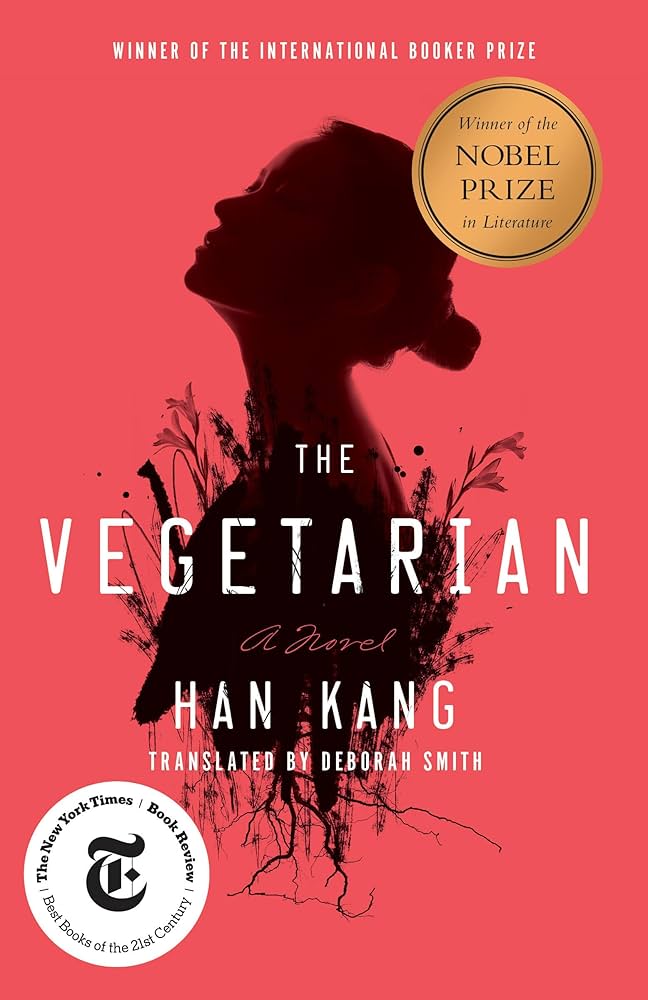
The Vegetarian – Han Kang
Oh boy, if Klara and the Sun is a Nobel Prize masterpiece, then this has got to be the opposite. What I mean by that is I simply didn’t get it. And considering the four pages of 5-star reviews at the very beginning that talked about entirely different things (often conflicting things) they felt were represented by this book, others didn’t either. I can’t even write anything because I didn’t learn anything. But hey, at least it made my trip on an airplane a little less boring.
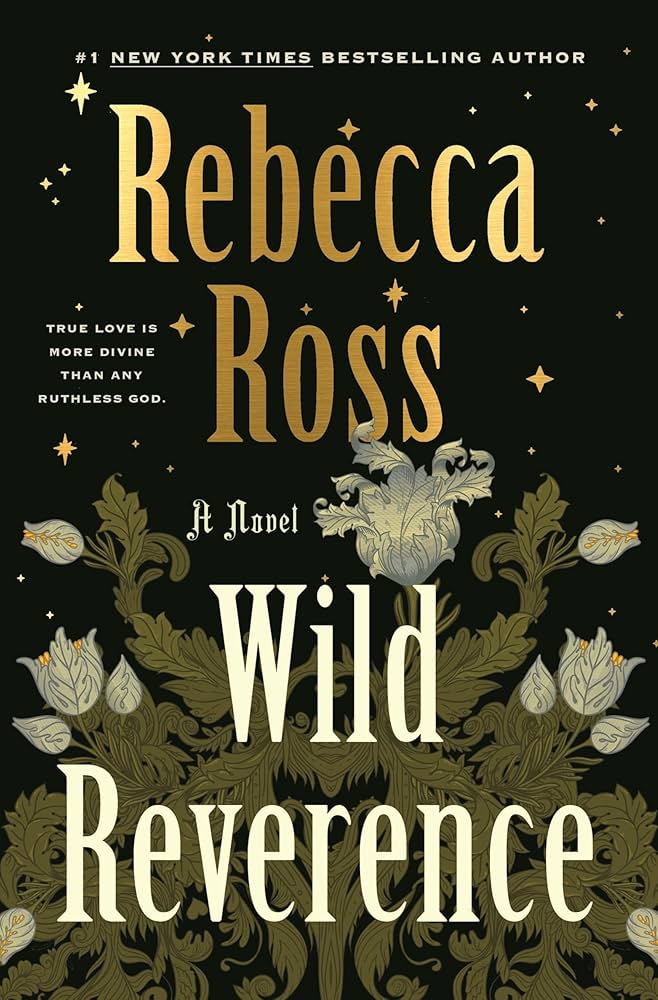
Wild Reverence – Rebecca Ross
This was a nice book! I thought the system and hierarchies of gods were really well done; it’s a cool idea for gods to have constellations, with the number of stars representing how powerful you are, and the ability of gods to steal constellations by killing other gods. The entire story has the vibe of a fable that would get passed down through generations- and hey, that’s the perfect way to add insta-love that actually makes sense in the plot! But regarding the plot, I simply could not understand why the story centers around the siege of a castle that is essentially meaningless in the large scale of the world. A book titled Wild Reverence should be about the fight between empires, high stakes at the level of The Lord of the Rings. It’s just a bit underwhelming that the plot is very local. But honestly, that’s not a valid criticism, just a personal preference.
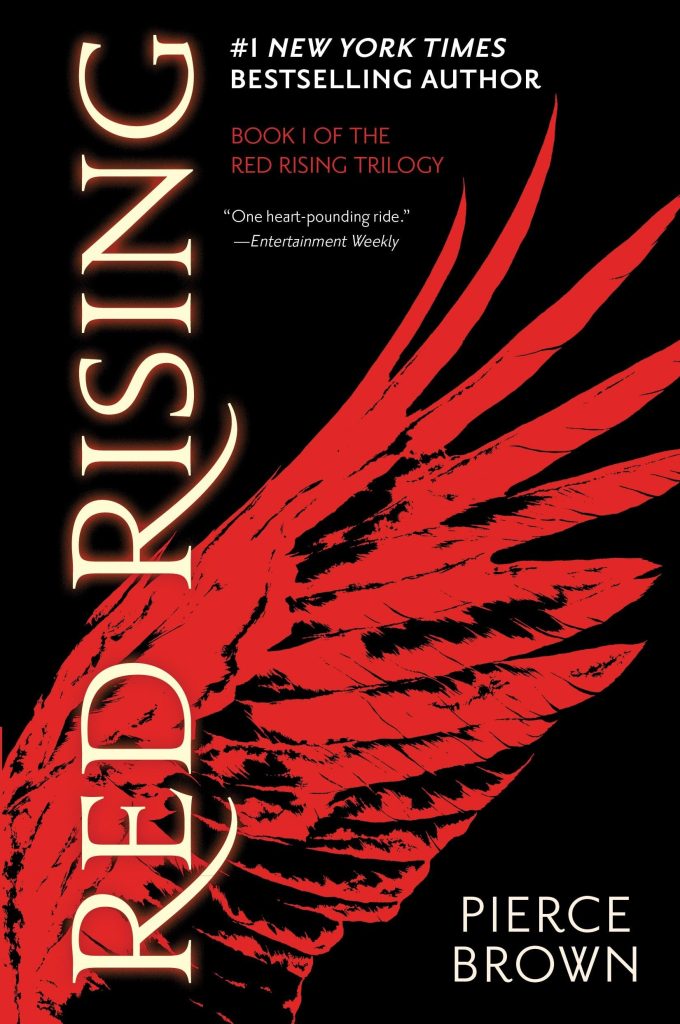
This book has been on my TBR for a long time, and I was so excited to read it. Unfortunately, it was a pretty crappy experience. It’s a shame because there were parts of this book that were genuinely thoughtful and cool, but it’s overshadowed by bad social worldbuilding.
So… what I liked. There were specific science-fiction elements that were really interesting to read about; everything having to do with body modifications was fascinating, and the way Red society as a whole was able to terraform a planet was cool. Cool and quite sad, considering how many died. These elements of world building seem to be Brown’s strength, because when it comes to social worldbuilding, everything falls apart.
First of all, what’s going on with gender? Underground in the mines, gender differences made perfect sense. Men are generally stronger, so they would do the dangerous physical tasks associated with terraforming the planet. They play the most important role in society, which is why the ‘boys are strong protectors’ and ‘girls are dainty and weak’ mindset makes sense. Even the way Eo’s death was spun as ‘boo hoo a pure innocent girl was killed’ fits the social world building of Red society. I had no issues with the part of this book that happened underground. However, the second Darrow joined the resistance and infiltrated the Golds, everything stopped making sense.
Humanity managed to achieve genetic engineering and body modifications, which is how they were able to make the colors separate in the first place. However, why wouldn’t they genetically engineer Gold women to be as strong as Gold men? This plot hole becomes more and more evident throughout the civilizations game. Female contestants were generally treated like cattle and taken advantage of by male contestants; comments adjacent to “you stole my women! How could you do that to me!” were thrown around a lot, and sexual violence was disturbing with how often it happened and how little relevance it had with the message and plot. The male characters were also laughably petty, always getting into arguments about how badly their masculinity was hurt by another guy’s actions. To be fair, this is how our human society is, but the Golds are a superior race of people; wouldn’t they have figured out that gender differences only weaken civilization? That both women and men could be genetically engineered to be strong and capable leaders that don’t act like six-year olds dropped in a rainforest?
But anyways, the social world building of this book kinda sucks, and I’m starting to think that the ‘girls are dainty’ view doesn’t actually belong to Darrow, but was actually projected by the author. I don’t think I’ll be continuing the rest of the series.